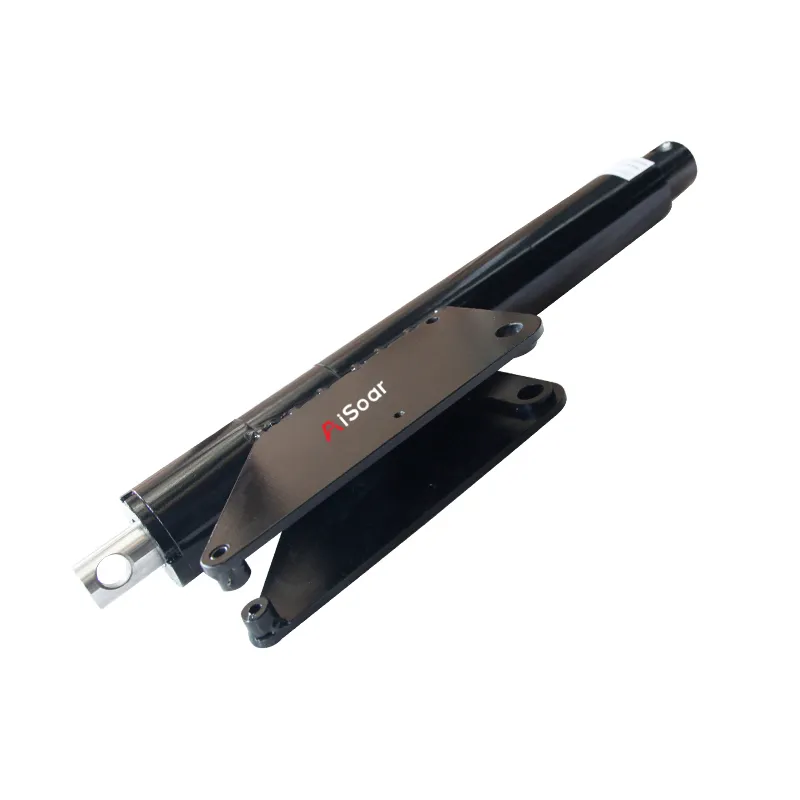
A dump trailer that lifts slowly is not always suffering from a failed hydraulic pump. The problem may come from the battery, electrical cables, hydraulic oil, hoses, relief valve, cylinder, scissor hoist mechanism, or even the way the trailer is loaded.
Before replacing components, first determine when the problem occurs:
- Does the trailer lift slowly when empty?
- Does it only slow down under a heavy load?
- Is the first part of the lifting cycle slower than the rest?
- Does the system become slower after several cycles?
- Is the trailer slow in cold weather but normal after warming up?
The answer can help narrow down whether the problem is electrical, hydraulic, mechanical, or load-related.
1. Low Battery Voltage
Most small and medium dump trailers use a 12V or 24V DC hydraulic power unit. The electric motor requires high current when the trailer starts lifting, especially when the dump body is fully loaded.
A weak battery may still operate the motor, but the motor speed can be too low to drive the hydraulic pump at its intended flow rate. The result is slow cylinder movement.
Common signs include:
- The motor sounds weaker than normal.
- The motor speed drops sharply under load.
- The trailer lifts normally after the battery is charged.
- The system works better when connected to the tow vehicle.
- The motor relay or cables become unusually hot.
Check the battery condition and measure voltage both before operation and while the motor is running. A battery that appears normal without load may experience a large voltage drop during lifting.
For trailers used frequently, the charging system must also be able to restore the energy consumed during each lifting cycle.
2. Undersized or Poor Electrical Connections
Even with a good battery, the motor may not receive enough current if the electrical cables are too small, too long, loose, or corroded.
High resistance in the electrical circuit reduces motor speed and can create heat at the terminals.
Inspect:
- Battery cables
- Ground cable
- Motor terminals
- Solenoid connections
- Battery isolator
- Fuse holder
- Remote control wiring
- Trailer-to-vehicle charging cable
The ground connection is especially important. A loose or corroded ground can cause the same symptoms as a weak battery.
Use cables suitable for the motor current and installation length. Cable selection should not be based only on voltage. A 12V motor usually requires higher current than a comparable 24V motor, making cable size and connection quality particularly important.
3. Low Hydraulic Oil Level
A low oil level can prevent the pump from receiving a continuous supply of hydraulic fluid.
When the pump draws air together with the oil, the cylinder may move slowly, unevenly, or with vibration. The power unit may also produce a whining or rattling sound.
Check the oil level with the dump body fully lowered and the cylinder retracted. Filling the reservoir while the cylinder is extended may cause the tank to overflow when the body is lowered.
Also inspect the system for:
- External oil leakage
- Loose hose fittings
- Damaged seals
- Cracked reservoir
- Oil escaping through the breather
- Incorrect reservoir installation angle
Do not overfill the tank. The reservoir needs sufficient space for oil return and thermal expansion.
4. Air in the Hydraulic System
Air trapped inside the cylinder, hoses, or pump inlet can reduce system efficiency.
Possible symptoms include:
- Jerky lifting
- Delayed cylinder response
- Foamy oil
- Unstable lifting speed
- Unusual pump noise
- Cylinder movement after the control is released
Air may enter the system through a loose suction connection, low oil level, damaged inlet seal, or improper filling procedure.
After repairing the source of air entry, cycle the trailer carefully without a heavy load to help remove trapped air. Follow the power unit and cylinder supplier’s bleeding procedure where applicable.
Continuing to operate a pump under cavitation or aerated-oil conditions can damage the pump and reduce component life.
5. Oil That Is Too Thick or Unsuitable
Hydraulic oil viscosity directly affects flow resistance.
When the oil is too thick, especially in cold weather, the pump requires more power to move it through the system. The trailer may lift slowly during the first cycle and improve after the oil warms up.
Oil that is too thin can create a different problem. Internal leakage inside the pump, valve, or cylinder may increase, reducing the effective flow and lifting force.
Use hydraulic oil suitable for:
- Ambient temperature
- Pump design
- Seal materials
- System pressure
- Operating frequency
- Outdoor storage conditions
Do not mix different oil types without confirming compatibility. Contaminated or degraded oil should also be replaced rather than corrected by simply adding new oil.
6. Restricted Hydraulic Hoses or Fittings
A restriction between the pump and cylinder reduces oil flow and slows cylinder extension.
Possible restrictions include:
- A bent or crushed hose
- A hose with an internal damaged lining
- Fittings with an excessively small internal passage
- Incorrect quick couplings
- Contaminated valve passages
- A partially closed shut-off valve
- Incorrect hose routing
- A blocked suction strainer
The outside of a hose may look normal while the inner lining has separated and restricted the flow.
Check whether the hose becomes unusually hot during operation. Localized heat can indicate pressure loss across a restriction.
Replacement hoses should match the required working pressure, flow rate, internal diameter, bend radius, and installation environment.
7. Hydraulic Pump Wear
A worn hydraulic pump may continue running but produce less effective flow, especially at higher pressure.
A trailer may lift at an acceptable speed when empty but become very slow with a full load. As pressure increases, worn internal pump clearances allow more oil to leak inside the pump instead of flowing to the cylinder.
Possible pump-related signs include:
- Slow lifting under load
- Increasing pump noise
- Excessive oil temperature
- Reduced pressure
- Metal particles in the oil
- Performance becoming worse over time
Pump condition should be evaluated together with system pressure and flow. Replacing the pump without checking the relief valve, motor speed, suction condition, and oil contamination may not solve the original problem.
8. Incorrect Relief Valve Setting
The pressure relief valve protects the hydraulic system from excessive pressure.
If the relief valve setting is too low, part of the pump flow may return to the tank before sufficient pressure reaches the cylinder. The trailer may lift slowly, stop lifting, or only raise after some load is removed.
A relief valve that is contaminated, worn, or stuck partially open can create similar symptoms.
Do not increase the relief pressure without confirming the rated pressure of:
- Hydraulic pump
- Cylinder
- Hoses
- Fittings
- Valve block
- Reservoir
- Scissor hoist structure
- Trailer frame
Increasing pressure may temporarily make the trailer lift, but it can overload the hydraulic and mechanical components. Relief pressure should be checked using a suitable pressure gauge and adjusted according to the approved system specification.
9. Internal Leakage in the Hydraulic Cylinder
A cylinder can leak internally without showing oil on the outside.
If the piston seal is worn or damaged, oil may pass from the pressure side to the opposite side of the piston. This reduces the cylinder’s effective force and speed.
Typical symptoms include:
- Slow lifting under load
- Trailer body drifting downward
- Cylinder unable to hold position
- Power unit running continuously without normal movement
- Hydraulic oil heating quickly
External leakage around the rod seal is easier to identify, but internal leakage usually requires a pressure-holding or leakage test.
The cylinder should also be checked for a bent rod, damaged barrel, worn pins, misalignment, or side loading.
10. Mechanical Resistance in the Scissor Hoist
Not every slow-lifting problem is hydraulic.
The hydraulic cylinder may be functioning correctly while the scissor mechanism is resisting movement.
Inspect:
- Pivot pins
- Bushings
- Grease points
- Mounting brackets
- Rear body hinges
- Bent scissor arms
- Loose or damaged retaining parts
- Frame deformation
- Misaligned mounting points
- Contact between the hoist and trailer frame
Dry, corroded, or damaged pivot points can significantly increase the force required to start lifting.
The left and right sides of the mechanism must remain aligned. An incorrectly installed bracket can introduce side force into the cylinder and cause uneven wear.
Never inspect or service the mechanism under a raised body unless the approved mechanical safety support is fully engaged.
11. Trailer Overload or Poor Load Distribution
A dump trailer may lift slowly because the actual load is greater than the system was designed to handle.
The hydraulic system must lift not only the material but also the dump body, tailgate, covers, ramps, and other installed equipment.
Load position is equally important. Material concentrated near the front of the body creates greater lifting torque than the same load positioned closer to the rear hinge.
Wet soil, compacted gravel, demolition material, and frozen loads can also be much heavier than expected.
Check:
- Actual payload weight
- Dump body weight
- Load position
- Material density
- Whether the material is stuck to the body
- Trailer and hoist rated capacity
Do not increase hydraulic pressure to compensate for an overloaded or incorrectly designed trailer.
12. Incorrect Hoist Geometry
The beginning of the lifting cycle is normally the most demanding part of dump trailer operation.
When the body is almost horizontal, the cylinder and scissor mechanism may have limited mechanical leverage. If the hoist is mounted in the wrong position, the available lifting force can be significantly reduced.
Incorrect geometry can result from:
- Hoist installed too far forward or backward
- Incorrect rear hinge position
- Wrong cylinder closed length
- Wrong cylinder stroke
- Incorrect mounting bracket height
- Different dump body length from the original design
- Replacement cylinder with different dimensions
A longer cylinder or larger bore does not automatically solve a geometry problem. The complete arrangement should be checked using the trailer dimensions, hinge position, hoist mounting points, cylinder stroke, and required dumping angle.
13. Overheating After Repeated Cycles
When a trailer lifts normally at first but becomes slower after several cycles, the system may be overheating.
Possible causes include:
- Motor duty cycle exceeded
- Reservoir too small
- Relief valve operating continuously
- Worn hydraulic pump
- Internal cylinder leakage
- Restricted hoses
- Oil viscosity too low at operating temperature
- Insufficient cooling time between cycles
A compact DC hydraulic power unit is often designed for intermittent rather than continuous operation. Repeated cycles without sufficient rest can overheat the motor and hydraulic oil.
The required duty cycle should be considered when selecting the motor, pump, reservoir, and hydraulic circuit.
A Practical Troubleshooting Sequence
A useful inspection order is:
| Step | Check |
|---|---|
| 1 | Confirm payload and load distribution |
| 2 | Test the battery under load |
| 3 | Inspect power cables, ground and solenoid connections |
| 4 | Check hydraulic oil level and condition |
| 5 | Inspect hoses, fittings and suction connections |
| 6 | Listen for pump cavitation or abnormal motor noise |
| 7 | Measure hydraulic pressure during lifting |
| 8 | Check the relief valve operation |
| 9 | Inspect the cylinder for internal or external leakage |
| 10 | Inspect scissor pivots, rear hinges and mounting alignment |
| 11 | Review hoist geometry and cylinder dimensions |
| 12 | Test system flow and pump condition |
This order starts with common external problems before moving to component testing and system redesign.
Conclusion
A slowly lifting dump trailer can be caused by low battery voltage, poor electrical connections, insufficient oil, air in the system, unsuitable oil viscosity, restricted hoses, pump wear, an incorrect relief valve setting, cylinder leakage, mechanical binding, overload, or incorrect hoist geometry.
The best solution is to diagnose the complete system rather than replacing the pump or increasing pressure immediately.
For a technical review, provide:
- Maximum payload
- Dump body weight and length
- Required dump angle
- Scissor hoist model
- Cylinder bore and stroke
- Hydraulic power unit voltage
- Pump displacement
- Relief pressure setting
- Photos or drawings of the installation
- Description of when the slow lifting occurs
AiSoar supplies hydraulic scissor hoist assemblies, replacement cylinders, 12V and 24V hydraulic power units, hoses, fittings, hinges, safety supports, and complete dump trailer hydraulic kits. The hydraulic and mechanical components can be matched according to the trailer dimensions and operating requirements.