Mobile equipment often works under its most demanding conditions during summer. Construction machinery, agricultural equipment, garbage trucks, aerial work platforms, and special vehicles may face high ambient temperatures, long operating hours, heavy loads, dust, and sudden rain.
As hydraulic oil temperature rises, viscosity decreases. Small problems involving seals, guide clearances, rod surfaces, mounting alignment, or contamination can become more visible after the system warms up. Typical symptoms include leakage, load drift, unstable movement, reduced cushioning, and abnormal wear.
Summer maintenance should therefore cover more than oil temperature. The rod, seals, mounting points, hoses, oil condition, cooling system, and surrounding environment should all be checked regularly.
Daily or Shift Inspection
Check for External Leakage
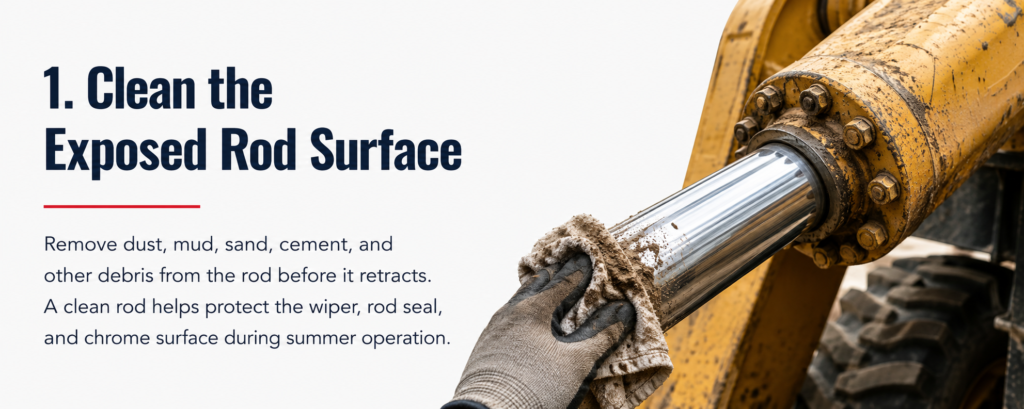
Inspect the cylinder head, gland area, ports, hose connections, and tube welds before and after operation.
A light, even oil film on the rod does not always mean that the rod seal has failed. Clean the area, record the condition, and continue monitoring it. If oil collects into droplets or leakage becomes worse after the system reaches operating temperature, the cylinder should be inspected promptly.
Leakage near engines, exhaust pipes, brakes, or other hot components also creates an additional safety risk.
Clean and Inspect the Piston Rod
Remove mud, sand, cement dust, metal particles, and other contamination from the exposed rod. If these materials are pulled through the wiper during retraction, they can damage the rod seal, guide components, and chrome-plated surface.
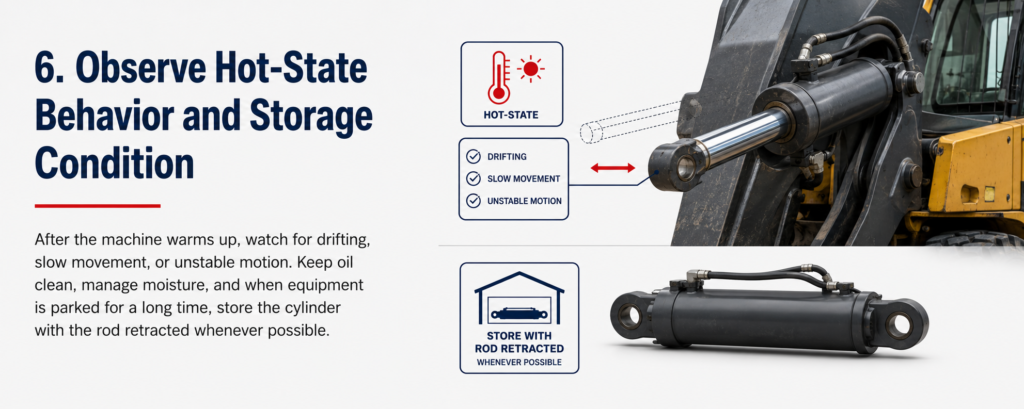
After cleaning, check for fresh scratches, rust spots, pitting, damaged plating, impact dents, or hardened debris. Summer storms and high humidity increase the risk of corrosion. When equipment will remain parked for a long period, retract the rod whenever the machine design and safety requirements allow.
Observe Movement and Temperature
Under safe conditions, operate the cylinder slowly through a complete stroke. The rod should move smoothly and remain aligned with the cylinder body.
Crawling, vibration, hesitation, or visible side movement may indicate air in the circuit, insufficient lubrication, worn guides, excessive seal friction, side loading, or misaligned mounting points.
Use an infrared thermometer to measure the cylinder tube and ports after operation. The acceptable temperature limit should come from the equipment manufacturer. If one cylinder is noticeably hotter than other cylinders performing similar work, it may have internal leakage, excessive friction, side loading, or a local restriction.
Inspect Pins, Fasteners, and Hoses
Check mounting bolts, pins, retaining clips, bushings, clevises, and spherical bearings. Loose or worn connections can change alignment and introduce side load.
Inspect hoses for abrasion, cracking, blistering, leakage, sharp bends, and contact with hot components. Summer heat accelerates rubber aging, especially when hoses are also exposed to vibration, sunlight, or oil contamination.
Weekly Inspection
Clean dried oil, mud, and debris from the wiper lip. Look for curling, cracking, hardening, tearing, or material loss. A damaged wiper allows dust and water to enter the guide and seal area, even before visible leakage appears.
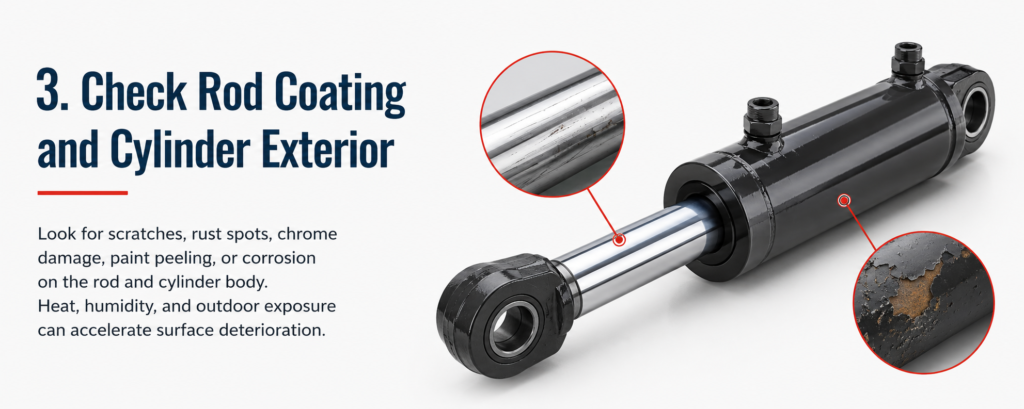
Cylinders that remain extended for long periods, such as stabilizer, outrigger, and boom cylinders, need extra corrosion protection. In coastal, fertilizer, wastewater, or humid environments, clean exposed rods more often and consider a compatible protective film or mechanical cover.
Avoid applying unknown grease to the rod. Some products collect abrasive dust or react with seal materials.
Check the hydraulic oil for unusual color, odor, foam, or cloudiness. Dark oil with a burnt smell may indicate oxidation. Milky oil may contain water. Persistent foam may point to low oil level, an air leak in the suction line, unsuitable return flow, or contamination.
Also test end-of-stroke cushioning at low speed and low load. Hotter, lower-viscosity oil may reduce the braking effect. A hard impact at the end of the stroke requires inspection of operating speed, load inertia, cushion adjustment, and internal condition.
Monthly Comprehensive Maintenance
Perform a load-holding check only in a safe position with reliable mechanical support. Mark or measure the rod position and monitor movement over a specified period.
Excessive drift does not automatically prove that the piston seal has failed. Leakage can also occur through the directional valve, counterbalance valve, pilot-operated check valve, or connected circuit. An isolation test may be needed to identify the true source.
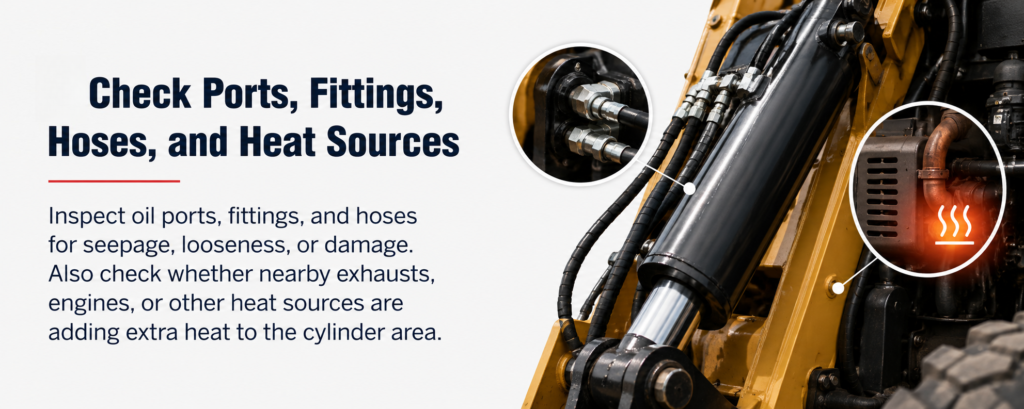
Inspect the rod surface carefully. Small raised burrs may be corrected by qualified personnel, but deep scratches, widespread plating loss, corrosion pits, or rod bending usually require professional repair. Aggressive sanding can change rod diameter and surface finish and should not be treated as a permanent solution.
Clean and inspect clevises, trunnions, mounting brackets, pin bosses, and tube welds. Repeated cracking near a mounting point may indicate excessive side load, shock loading, poor alignment, or insufficient structural stiffness.
After oil replacement, hose removal, cylinder repair, or circuit disassembly, operate the cylinder at low pressure and low speed through several full strokes until movement becomes smooth. Trapped air can cause jumping, local heat, cavitation, and seal damage.
Check rod boots, bellows, telescopic covers, and guards for tearing, trapped water, or accumulated debris. Clean hydraulic coolers, fans, radiator fins, tank surfaces, and protective screens so that airflow remains unobstructed.
Special Summer Protection
Whenever practical, park equipment away from continuous direct sunlight. Cylinders close to engines, exhaust systems, or other heat sources may require heat shields or protective covers.
After storms, washing, or operation through standing water, clean exposed rods and inspect wipers, breathers, filler caps, and lubrication points. If water entry is suspected, sample the oil. Water can reduce lubricity, promote corrosion, damage additives, and cause emulsification.
Oil viscosity should be selected according to the equipment manual, actual operating temperature, pump requirements, system clearances, pressure, and duty cycle.
ISO VG 46 is common in many mobile hydraulic systems, while some high-temperature or heavy-duty applications may use ISO VG 68. However, changing viscosity grade simply because summer has arrived can create new problems.
A high viscosity index, good oxidation resistance, cleanliness, and compatibility with seal materials are often more important than changing viscosity alone.
Do not keep the control valve activated after the cylinder reaches full extension or retraction. This can force pump flow across the relief valve, generate unnecessary heat, and increase stress on seals, cushions, mounts, and hoses.
Safety and Maintenance Records
Before maintenance, lower the attachment to the ground or support it with a rated mechanical locking device. Shut down the power source and release residual pressure.
Never loosen a hose or fitting under pressure, and never use a hand to search for a pinhole leak. High-pressure hydraulic fluid can penetrate the skin and requires urgent medical treatment.
Create a maintenance record for each machine. Record cylinder or oil temperature, leakage location and severity, rod photographs, load drift, seal condition, and the operating conditions under which problems occur.
A single inspection shows only the current condition. Trend records can reveal gradual temperature increases, worsening leakage, or faster load drift before they cause an unplanned shutdown.
Conclusion
Summer reliability depends on more than controlling hydraulic oil temperature. Dust, moisture, long operating hours, frequent cycling, side loading, and external heat can all shorten cylinder life.
A structured daily, weekly, and monthly inspection program helps maintenance teams identify seal wear, rod damage, contamination, alignment problems, and cooling restrictions at an early stage. This reduces unexpected downtime during the busiest operating season and helps extend the service life of both the hydraulic cylinder and the complete hydraulic system.