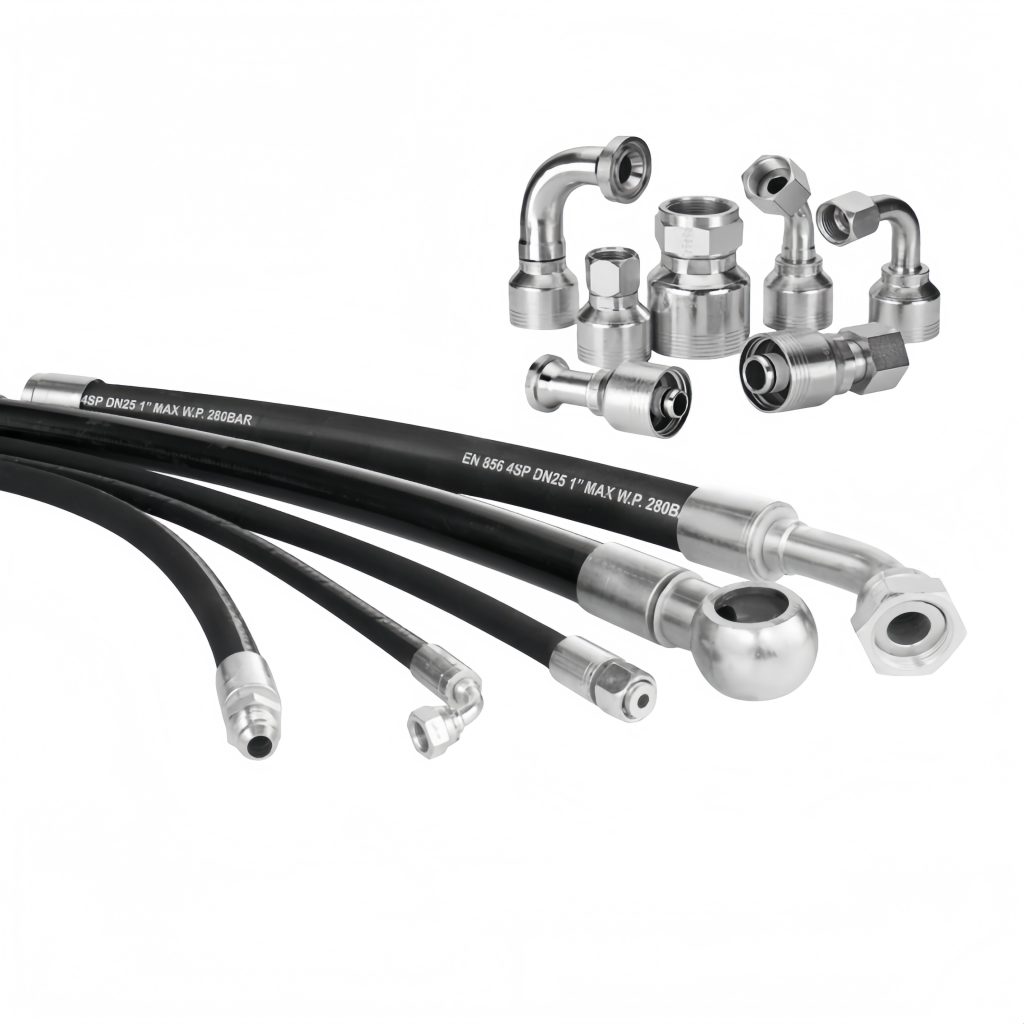
Struggling with hydraulic system failures due to hose issues? Using the wrong hose leads to leaks, breakdowns, and costly downtime. Here’s how to choose the right one.
Choosing the correct hydraulic hose involves matching hose specifications to application needs, including pressure, fluid type, temperature, and bend radius. Using a proper selection process avoids leaks, system failures, and safety hazards, while improving system efficiency and reliability.
Find out what makes or breaks a hydraulic system by learning exactly how to select the right hose.
Hose Selection Process/Criteria
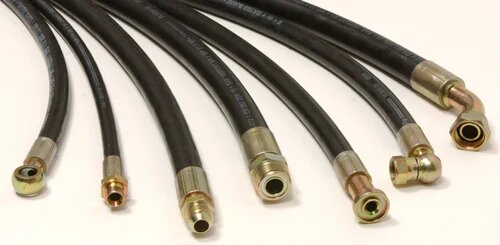
The selection process for hydraulic hoses follows the well-known STAMPED criteria:
-
Size: Inner diameter, outer diameter, and length
-
Temperature: Operating and ambient temperature ranges
-
Application: How and where the hose will be used
-
Material/Media: Fluid type (oil, water, chemicals)
-
Pressure: Operating and maximum working pressure
-
End Fittings: Types of hydraulic fittings and hoses that must be compatible
-
Delivery: Special delivery or packaging requirements
This structured approach ensures compatibility with the entire hydraulic system. Refer to a hydraulic hose size chart to ensure precise sizing, and always check for compatibility with your tractor, excavator, or other hydraulic equipment. Keep in mind that certain applications may also require specialized features such as abrasion resistance or non-conductive materials.
Factors Influencing Hose Selection
1. Hydraulic Hose Size
1)Length determination
Determine the length of the hose by accurately measuring the distance between the two components to be connected in the hydraulic system. When measuring, the direction of the hose installation should be taken into account, and a certain amount of bending allowance should be reserved to avoid the hose being in an overstretched or taut state after installation. For example, if the actual straight line distance of the connection is 1m, but because the hose needs to go around some obstacles, and to ensure a certain bending arc, it may be necessary to choose a length of 1.2 – 1.3m hose.
2)Bending radius limitation
The bending radius limit different models of hydraulic hose has its corresponding minimum bending radius. In the process of installation and use, the hose bending radius should not be less than the minimum value specified, otherwise it will lead to damage to the reinforced layer of the hose, reducing the pressure resistance of the hose. Generally speaking, the larger the inner diameter of the hose, the larger the minimum bending radius. For example, a hose with an inner diameter of 10mm may have a minimum bending radius of 130mm, while a hose with an inner diameter of 25mm may have a minimum bending radius of 300mm.
2.Operating Pressure
1)Operating Pressure
The first step is to be aware of the pressure range of the hydraulic system during normal operation, including possible peak pressures. This can be determined by looking at the rated pressure of the hydraulic pump, the set pressure of the safety valve, and so on. For example, in the hydraulic system of a forklift truck, the system pressure may reach about 14MPa when lifting a load, so it is important to select a hydraulic hose with a pressure rating higher than this value. It is generally recommended to select a hose with a rated pressure that is 30% – 50% higher than the maximum system pressure to cope with pressure fluctuations and shocks.
2) Consider pressure fluctuations and pulses
Pressure fluctuations are common in hydraulic systems, and if the hose has poor pressure resistance, it will be easily damaged under frequent pressure changes. For systems with large pressure fluctuations, choose hoses with good pulse resistance. Hoses are designed to better withstand pressure pulsations through special reinforcing layers, such as multi-layer steel wire braiding or winding.
3.Working Environment
1) Temperature range
Consider the operating temperature range of the hydraulic system. If the system works in a high-temperature environment, you need to choose a hydraulic hose that can withstand high temperatures. Such hoses are usually made of special rubber materials, such as fluoroelastomer, which have good high-temperature resistance. On the contrary, in low-temperature environments, such as outdoor construction machinery in the northern winter, to choose the low temperature can still maintain good flexibility of the hose, to avoid the hose due to harden, become brittle and rupture. Some hoses using synthetic rubber have better performance at low temperatures.
2) Chemical exposure
When the hydraulic hose may come into contact with chemicals, make sure that the hose’s outer rubber material and reinforcing layer material can resist the corrosion of these chemicals. For example, in the chemical industry in the hydraulic equipment, the hose may come into contact with a variety of acids, alkalis, organic solvents and so on. For exposure to such substances, you can choose rubber materials with corrosion resistance.
3) Mechanical protection needs
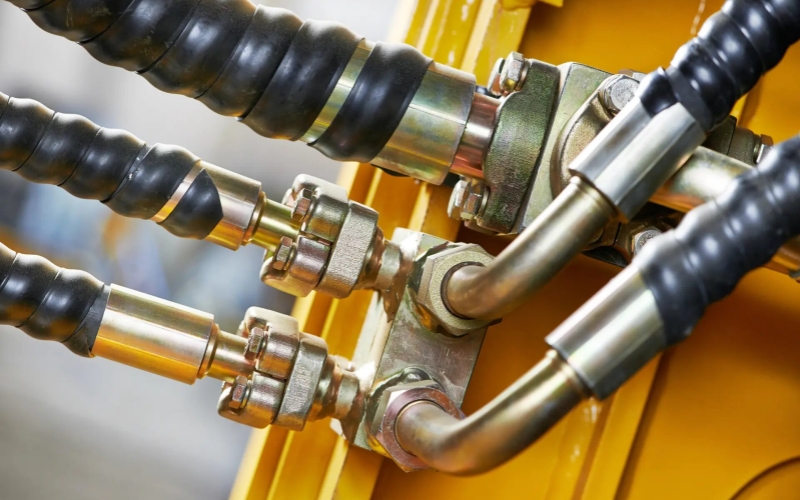
If the hose is working in an environment prone to mechanical damage, such as in mining machinery or construction sites, additional mechanical protection of the hose needs to be considered. You can use metal sheath or rubber protective sleeve to wrap the hose to prevent it from being scratched by sharp objects, by heavy objects, such as extrusion.
4. Compatibility with other components
1) Matching of connections
The end connections of hydraulic hoses need to be matched to the interfaces of other hydraulic components in the system, such as hydraulic pumps, cylinders, valves, and so on. For example, the system of hydraulic pumps and cylinders using what type of interface, then you need to choose the corresponding type of connector hydraulic hose to match.
2) Material compatibility
Be sure that the material of the hose is compatible with the material of the oil and other components in the hydraulic system. For example, some special hydraulic fluid may be on the rubber material of the hose to produce swelling or chemical reaction, affecting the performance of the hose. At the same time, the hose and other components in the long-term contact process, should not occur in the electrochemical corrosion and other phenomena.
Common Mistakes & Selection Tips
Mistakes in hose selection are surprisingly common but easily avoidable:
-
Ignoring Pressure Ratings: Selecting a hose based on appearance or feel can lead to dangerous mismatches. Always check the working pressure.
-
Wrong Fitting Compatibility: Improper connection between hydraulic hoses and fittings leads to leakage and failure.
-
Improper Hose Routing: Sharp bends, twists, or routing too close to hot surfaces can degrade hose integrity.
-
Overlooking Fluid Compatibility: Some fluids corrode or soften hose linings. Confirm chemical compatibility before purchase.
-
Neglecting Manufacturer Guidelines: Each hose has technical specifications and recommended applications. Always consult datasheets.
Tips to avoid issues:
-
Use a hydraulic hose size chart every time.
-
Ask suppliers for sample tests if unsure.
-
Use protective sleeves in rugged environments.
-
Label hoses for easy identification and maintenance.
-
Schedule periodic inspections and replacements proactively.
Avoiding these mistakes ensures optimal performance and keeps your machinery operating safely and efficiently.