Introduction
Trailer jacks are essential components used to support and raise the front end of a trailer during coupling, uncoupling, loading, and maintenance operations. While traditional mechanical jacks are still widely used, hydraulic trailer jacks have become increasingly popular for heavy-duty trailers because of their higher lifting capacity and smoother operation.
But what exactly is a hydraulic trailer jack, and how does it work?
In this article, we’ll explain the basic principles, components, and advantages of hydraulic trailer jacks and why they have become an important lifting solution for modern trailers.
What Is a Hydraulic Trailer Jack?
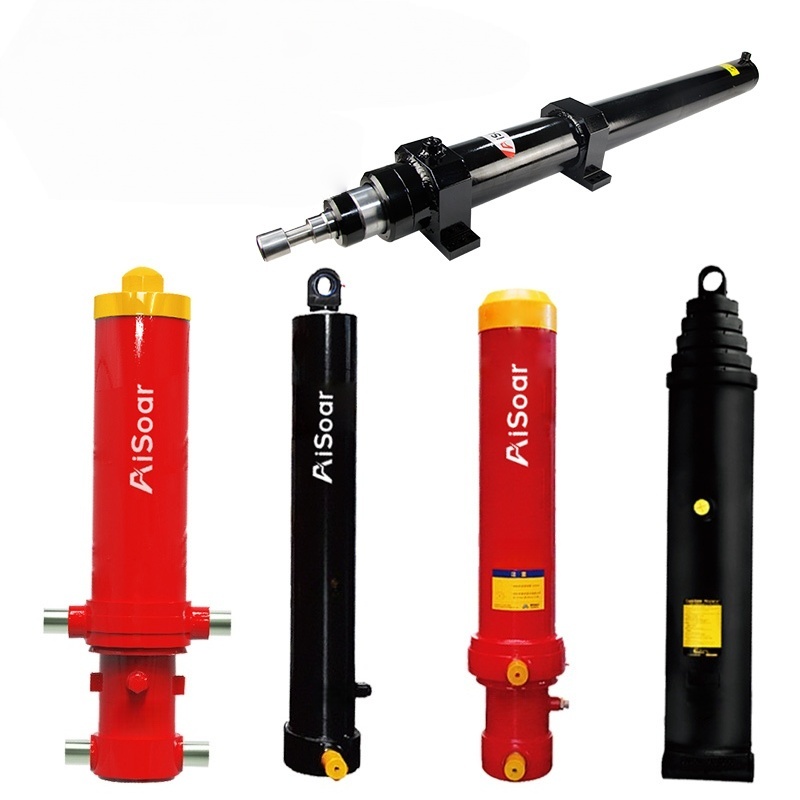
A hydraulic trailer jack is a lifting device that uses hydraulic pressure to raise and support the tongue or front section of a trailer.
Instead of relying on a screw mechanism or manual gear system, hydraulic trailer jacks use pressurized hydraulic fluid to move a hydraulic cylinder, creating the force required to lift heavy trailer loads.
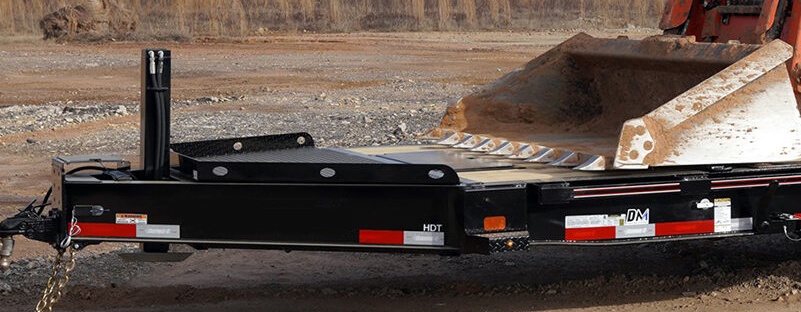
Hydraulic trailer jacks are commonly installed on:
- Equipment trailers
- Dump trailers
- Agricultural trailers
- Gooseneck trailers
- Heavy-duty transport trailers
- Industrial trailers
Because hydraulic systems can generate large amounts of force with relatively little input effort, they are particularly suitable for heavy trailers.
Why Were Hydraulic Trailer Jacks Developed?
As trailer sizes and payload capacities increased, traditional mechanical trailer jacks began to show several limitations. Hydraulic trailer jacks were developed to provide higher lifting performance, improved efficiency, and safer operation.
| Challenges of Mechanical Jacks | Advantages of Hydraulic Trailer Jacks |
|---|---|
| High manual operating effort | Reduced physical effort |
| Slow lifting speed | Faster lifting cycles |
| Difficult to lift heavy trailers | Greater lifting capacity |
| Operator fatigue during frequent use | Easier operation |
| Uneven or jerky movement | Smooth and controlled lifting |
| Limited efficiency in commercial applications | Improved productivity |
| Reduced stability under heavy loads | Better safety and stability |
As trailer capacities continue to increase, hydraulic lifting systems have become widely used in commercial, industrial, agricultural, and heavy-duty transportation applications.
How Does a Hydraulic Trailer Jack Work?
The operating principle of a hydraulic trailer jack is relatively simple.
Step 1: Pressure Generation
The pump creates hydraulic pressure by forcing oil into the hydraulic circuit.
Step 2: Oil Enters the Cylinder
Pressurized oil flows into the cylinder chamber.
Step 3: Cylinder Extension
The piston rod extends as hydraulic pressure acts on the piston surface.
Step 4: Trailer Lifting
The extending cylinder pushes the jack leg downward, raising the trailer tongue upward.
Step 5: Lowering Operation
When the control valve releases pressure, the hydraulic fluid returns to the reservoir, allowing the cylinder to retract.
This hydraulic process provides smooth and controlled lifting motion.
Why Hydraulic Systems Can Lift Heavy Loads
One of the biggest advantages of hydraulic trailer jacks is their ability to generate high lifting force.
Hydraulic pressure acts evenly across the piston surface inside the cylinder. As the piston area increases, the lifting force also increases.
This allows relatively compact hydraulic cylinders to lift several tons of trailer weight.
Benefits include:
- High force output
- Stable movement
- Smooth lifting
- Controlled lowering
- Reduced operator effort
This is why hydraulic systems are commonly used in many heavy-duty applications beyond trailers.
Manual and Electric Hydraulic Trailer Jacks
Hydraulic trailer jacks generally use one of two power sources.
Manual Hydraulic Systems
Manual systems use a hand-operated pump.
Advantages:
- No electricity required
- Lower cost
- Simple construction
Applications:
- Small trailers
- Agricultural equipment
- Utility trailers
Electric Hydraulic Systems
Electric hydraulic systems use a DC motor and hydraulic power unit.
Advantages:
- Faster operation
- Reduced labor
- One-button control
- Suitable for frequent operation
Applications:
- Dump trailers
- Equipment trailers
- Heavy-duty transport trailers
Future Trends in Hydraulic Trailer Jacks
Modern trailer systems continue to evolve.
Several trends are becoming increasingly common:
- Electric hydraulic power units
- Wireless remote control
- Integrated hydraulic systems
- Smart trailer technology
- Compact hydraulic designs
These technologies improve convenience, safety, and operating efficiency.
Conclusion
A hydraulic trailer jack is a lifting device that uses hydraulic pressure to raise and support a trailer. Compared with traditional mechanical systems, hydraulic jacks provide greater lifting force, smoother operation, and improved efficiency.
By understanding how hydraulic trailer jacks work and the components involved, trailer owners and equipment operators can better understand the advantages of hydraulic lifting technology.
As trailer capacities continue to increase, hydraulic trailer jacks will remain an important solution for heavy-duty lifting applications.