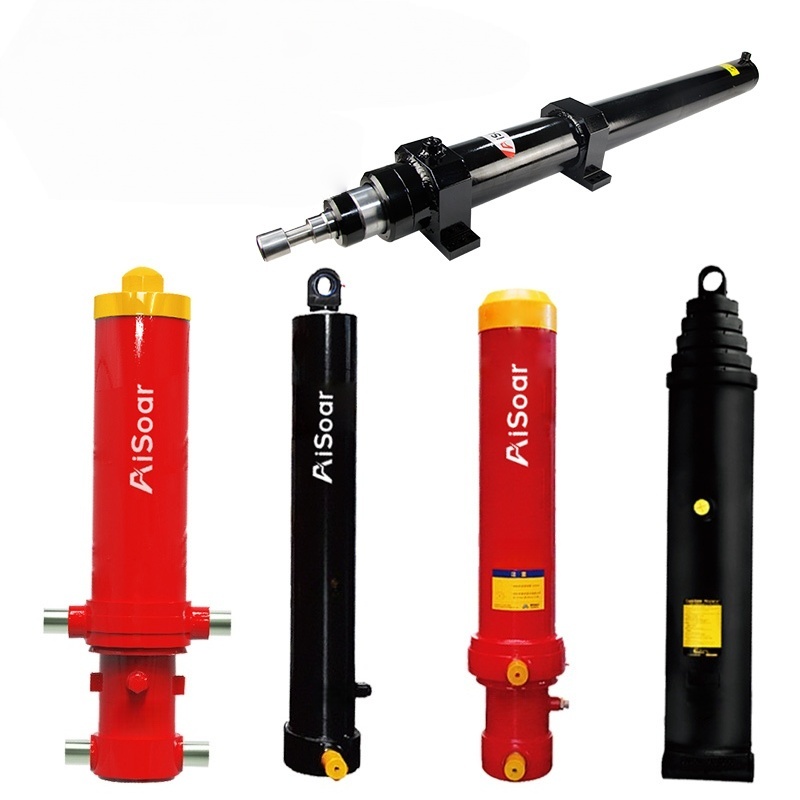
Trailer jacks play an important role in lifting, stabilizing, and supporting trailers during coupling, unloading, and maintenance operations. As trailer equipment continues to evolve, hydraulic trailer jacks and electric trailer jacks have become two popular alternatives to traditional manual jacks.
Although both systems reduce physical effort and improve convenience, they operate differently and are suitable for different applications.
This guide compares hydraulic and electric trailer jacks to help trailer owners, OEM manufacturers, and equipment builders choose the right solution.
What Is a Hydraulic Trailer Jack?
A hydraulic trailer jack is a heavy-duty lifting device that uses hydraulic pressure to lift, lower, and support trailers. Compared with manual or electric jacks, hydraulic trailer jacks provide greater lifting capacity, faster operation, and improved durability, making them ideal for commercial, agricultural, and industrial trailer applications.
A hydraulic trailer jack uses hydraulic pressure to raise and lower the trailer.
The system typically consists of:
- Hydraulic cylinder
- Hydraulic pump
- Oil reservoir
- Control valve
- Hydraulic hoses or integrated unit
Hydraulic pressure multiplies input force, allowing the jack to lift heavy loads smoothly and efficiently.
Hydraulic trailer jacks are commonly used on:
- Dump trailers
- Equipment trailers
- Agricultural trailers
- Heavy-duty commercial trailers
- Industrial transport trailers
What Is an Electric Trailer Jack?
An electric trailer jack is a lifting device that uses an electric motor to raise and lower trailers with minimal physical effort. By converting electrical energy into mechanical motion, it provides convenient push-button operation for trailer coupling and leveling. Electric trailer jacks are commonly used on RVs, travel trailers, utility trailers, and other light-duty towing applications.
An electric trailer jack uses an electric motor to drive a screw mechanism that lifts or lowers the trailer.
Most electric trailer jacks operate on:
- 12V DC battery systems
- Vehicle power supply
- Trailer battery systems
Electric jacks are widely used on:
- Travel trailers
- RV trailers
- Utility trailers
- Boat trailers
- Light-duty recreational trailers
Hydraulic vs Electric Trailer Jack Comparison
Although both hydraulic and electric trailer jacks reduce manual effort, they are designed for different applications. Hydraulic trailer jacks offer higher lifting capacity and better durability for heavy-duty trailers, while electric trailer jacks provide convenient push-button operation for light-duty and recreational use. The following comparison highlights the key differences between the two systems.
| Comparison Item | Hydraulic Trailer Jack | Electric Trailer Jack |
|---|---|---|
| Lifting Capacity | 5,000–30,000+ lbs | 2,000–7,500 lbs |
| Typical Applications | Dump trailers, equipment trailers, agricultural trailers, industrial trailers | RVs, travel trailers, utility trailers, boat trailers |
| Lifting Speed | Fast and smooth hydraulic movement | Slower screw-driven operation |
| Operation Frequency | Suitable for frequent daily use | Better for occasional use |
| Lifting Efficiency | High efficiency with shorter lifting cycles | Moderate efficiency |
| Durability | Heavy-duty construction with long service life | Moderate durability |
| Shock Resistance | Excellent resistance to vibration and impact | Limited shock resistance |
| Environmental Resistance | Performs well in harsh working environments | Electrical components may be affected by moisture and corrosion |
| Service Life | Long-term industrial use | Moderate lifespan |
| Power Source | Hydraulic power unit or existing hydraulic system | 12V battery and electrical system |
| Installation Complexity | Requires hydraulic components and connections | Simple electrical installation |
| Common Maintenance | Hydraulic oil, seals, hoses | Battery, motor, wiring |
| Best Applications | Commercial and heavy-duty trailers | Recreational and light-duty trailers |
Advantages of Hydraulic Trailer Jacks vs Electric Trailer Jacks
The advantages of hydraulic and electric trailer jacks depend largely on the trailer type and operating conditions. Hydraulic trailer jacks provide superior lifting performance, durability, and reliability for commercial applications, while electric trailer jacks offer convenience, lower initial cost, and simple installation for recreational trailers. Understanding these advantages can help users select the most suitable solution for their needs.
| Advantage Category | Hydraulic Trailer Jack | Electric Trailer Jack |
|---|---|---|
| Lifting Force | Extremely high lifting capacity for heavy loads | Suitable for light to medium loads |
| Operating Speed | Fast lifting and lowering cycles | Convenient push-button operation |
| Physical Effort | Minimal operator effort | Minimal operator effort |
| Durability | Heavy-duty construction for long service life | Suitable for recreational use |
| Continuous Operation | Excellent for frequent daily operation | Best for occasional use |
| Load Stability | Smooth and stable lifting performance | Adequate for lighter trailers |
| Working Environment | Performs well in harsh industrial conditions | Ideal for clean and moderate environments |
| Installation | Integrates with hydraulic systems | Easy to install and wire |
| Maintenance | Long service intervals in heavy-duty applications | Simple electrical maintenance |
| Cost | Higher initial investment | Lower purchase cost |
| Typical Applications | Dump trailers, equipment trailers, agricultural trailers | RVs, travel trailers, utility trailers |
| Best For | Commercial and industrial applications | Recreational and light-duty applications |
Where Do Manual Trailer Jacks Fit?
Although this article focuses on hydraulic and electric trailer jacks, manual trailer jacks are still commonly used on lightweight trailers.Manual trailer jacks require hand cranking and typically offer lower lifting capacities. They are inexpensive and simple but require greater physical effort.For small utility trailers, manual jacks remain a practical solution. However, for frequent operation or heavier loads, electric and hydraulic systems provide significant advantages.
| Type | Capacity | Effort | Best For |
|---|---|---|---|
| Manual | Low | High | Small trailers |
| Electric | Medium | Low | RVs |
| Hydraulic | High | Very low | Heavy-duty trailers |
Which Trailer Jack Should You Choose?
The answer depends on your trailer type and operating requirements.
Choose an electric trailer jack if you:
- Own an RV or travel trailer
- Need occasional lifting
- Prefer easy installation
- Have lighter trailer loads
Choose a hydraulic trailer jack if you:
- Operate heavy trailers
- Require frequent lifting cycles
- Need maximum lifting force
- Work in commercial environments
- Already use hydraulic systems
Final Thoughts
Both hydraulic trailer jacks and electric trailer jacks offer significant improvements over manual jacks. Electric trailer jacks provide convenience and affordability for recreational users, while hydraulic trailer jacks deliver superior lifting power, durability, and efficiency for commercial and industrial applications.
As trailer loads continue to increase and operating efficiency becomes more important, hydraulic trailer jacks are becoming the preferred solution for heavy-duty trailer manufacturers and professional operators.