Loading docks are critical connection points between warehouses and transportation vehicles. As logistics operations become more demanding, dock levelers must provide reliable lifting performance, minimal maintenance, and long service life.
Traditionally, hydraulic dock levelers rely on separate hydraulic power units, hoses, valves, and cylinders. However, a new generation of dock levelers is increasingly adopting integrated electro-hydraulic actuators.
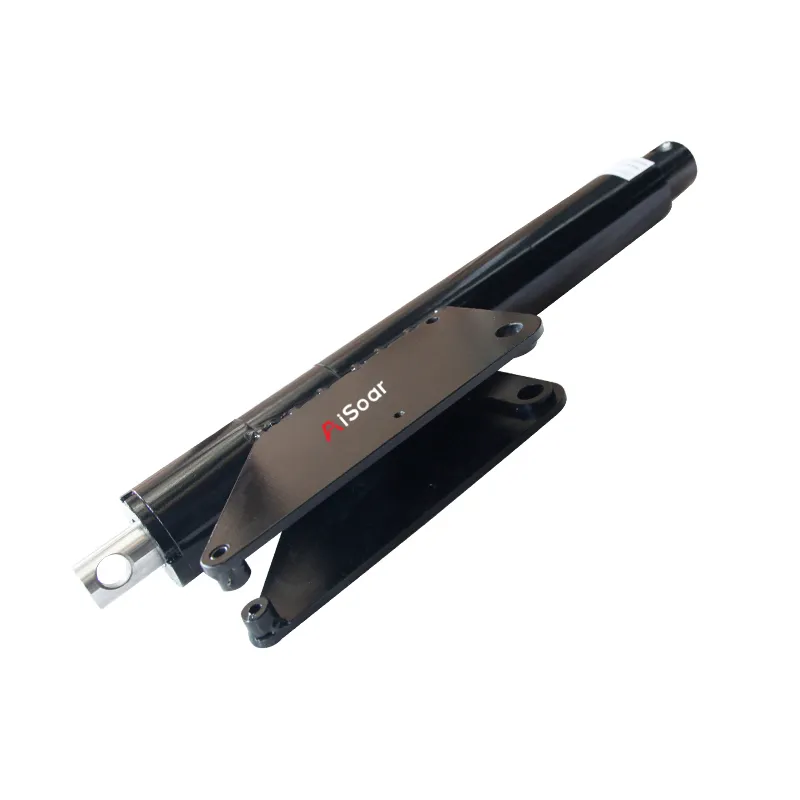
By combining an electric motor, hydraulic pump, oil reservoir, and hydraulic cylinder into a compact unit, electro-hydraulic actuators offer a simpler, cleaner, and more efficient lifting solution for modern dock levelers.
What Is an Electro-Hydraulic Actuator?
An electro-hydraulic actuator is a self-contained linear motion device that converts electrical energy into hydraulic force.
Unlike conventional hydraulic systems that require external hydraulic power packs, an electro-hydraulic actuator integrates:
- Electric motor
- Hydraulic pump
- Hydraulic cylinder
- Oil reservoir
- Pressure control system
- Internal hydraulic circuit
into one compact assembly.
When electrical power is applied, the motor drives the hydraulic pump, generating pressure that extends or retracts the actuator rod, creating powerful lifting motion.
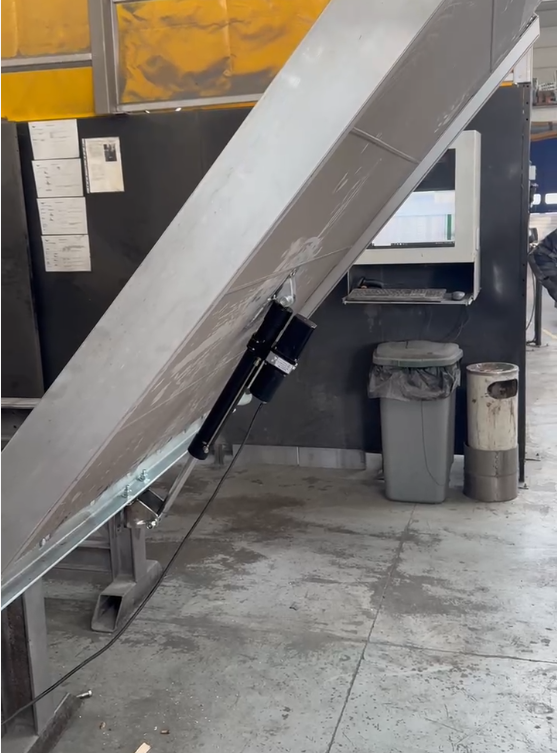
How Electro-Hydraulic Actuators Lift Dock Levelers
In a dock leveler application, the actuator is mounted beneath the platform structure.
Raising the Platform
When the operator presses the “UP” button:
- The electric motor starts.
- The internal hydraulic pump generates pressure.
- Hydraulic oil flows into the cylinder chamber.
- The actuator rod extends.
- The dock leveler platform rises smoothly.
Lowering the Platform
When the operator releases the control or activates the lowering function:
- Hydraulic pressure is released through the internal control circuit.
- The actuator retracts in a controlled manner.
- The platform lowers safely under its own weight.
This design eliminates the need for long hydraulic hoses and remote hydraulic power units.
Advantages of Electro-Hydraulic Actuators for Dock Levelers
Compact and Space-Saving Design
Traditional dock levelers often require:
- Hydraulic power units
- Oil tanks
- Hose assemblies
- Valve blocks
An electro-hydraulic actuator combines all these functions into a single unit, reducing installation complexity and saving valuable pit space.
Easy Installation
Because the hydraulic system is self-contained, installation becomes much simpler.
Manufacturers can:
- Reduce assembly time
- Minimize hydraulic plumbing
- Simplify electrical connections
- Lower production costs
This makes electro-hydraulic actuators particularly attractive for OEM dock leveler manufacturers.
Lower Maintenance Requirements
Hydraulic hose failures are one of the most common maintenance issues in traditional dock levelers.
Electro-hydraulic actuators significantly reduce:
- Hose leakage risks
- Oil contamination
- Hydraulic connection failures
- Service downtime
As a result, warehouse operators benefit from improved equipment availability.
High Lifting Force
Despite their compact size, electro-hydraulic actuators can generate substantial lifting force.
This makes them suitable for:
- Standard warehouse dock levelers
- Heavy-duty loading platforms
- Industrial lifting equipment
- Vehicle loading systems
The hydraulic principle allows large forces to be generated with relatively small actuator dimensions.
Improved Reliability
The integrated design protects critical hydraulic components from external damage and contamination.
Compared with traditional hydraulic systems, fewer external connections mean fewer potential failure points.
This contributes to:
- Longer service life
- Consistent performance
- Reduced maintenance costs