Customer Story
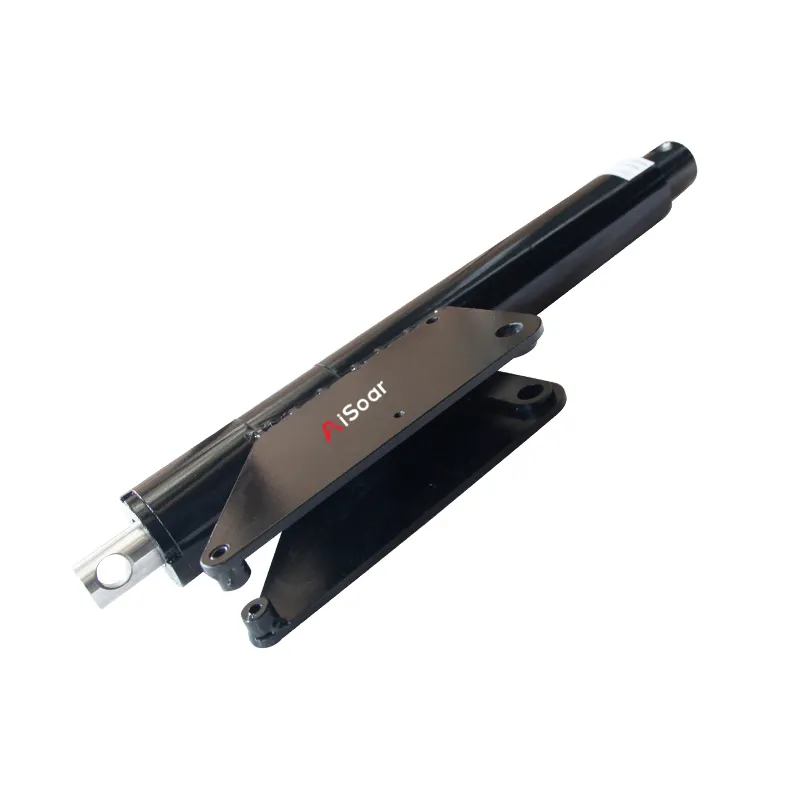
Your hydraulic cylinders are very good, but they’re too expensive for us. Maybe there’s a more resonable way to make it.
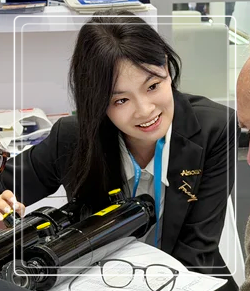
This was a comment from a customer from Poland at PTC ASIA 2026 in Shanghai, while we were discussing hydraulic cylinders for agricultural equipment.
He appreciated the quality of AISOAR’s hydraulic cylinders but needed a solution that would help him remain competitive. He explained that customers sometimes have different price expectations depending on where a product is manufactured.
The question was how to find a better balance between quality, manufacturing costs, and customer expectations.
As the conversation continued, he shared that his experience was mainly in business rather than manufacturing. He wondered whether some of his own requirements might be adding unnecessary costs. Perhaps there was a different way to manufacture the cylinders that he hadn’t considered.
What he wanted wasn’t simply a discount. He wanted someone who understood manufacturing to review his requirements and help him explore a more reasonable approach.
Sometimes, customers aren’t just looking for a better price. They’re looking for someone who can help them understand what’s behind it.
What’s Behind the Price?
It’s a question many equipment manufacturers may have asked themselves: if two hydraulic cylinders look almost the same, why can their prices be so different?
The difference isn’t always something you can see. It may come down to the steel used for the cylinder, the quality of the seals, the precision of the machining, or the testing carried out before delivery. These details add to manufacturing costs, but they can also make a difference when a cylinder is working under pressure, day after day.
This is why AISOAR continues to invest in its manufacturing capabilities. From precision CNC machining to our new factory’s 385-meter automatic painting line and Hydraulic Cylinder Testing & Validation Center, these investments are focused on making quality more consistent and manufacturing more efficient.
But quality is only part of the conversation. What if certain specifications could be adjusted without compromising performance or safety? Reviewing drawings, materials, and mounting requirements may reveal a more practical way to manufacture the cylinder.
For our customer from Poland, the next step was to look beyond the price itself — and consider what different customers actually needed from their cylinders.
Finding a Better Way Together
As we continued talking, something became clearer. The customer wasn’t supplying hydraulic cylinders to just one type of buyer. Some were going to OEM equipment manufacturers, where quality and long-term reliability were the main priorities. Others were intended for the aftermarket, where customers were more sensitive to price but still expected dependable performance.
Instead of trying to make every cylinder cheaper, we explored different cylinder configurations for different market needs. For OEM customers, the focus remained on technical and quality requirements. For the aftermarket, we considered more cost-effective configurations while maintaining necessary performance and safety standards.
The goal wasn’t simply to make a cheaper cylinder. It was to make the right cylinder for the right customer.