
Introduction
Hydraulic cylinders used in agricultural planter systems are exposed to continuous pressure, vibration, and changing field conditions throughout the planting season.
Over time, factors such as dust contamination, moisture, pressure cycling, and mechanical stress can gradually affect cylinder performance.
When wear begins, it does not usually happen suddenly. Instead, it shows progressive warning signs that can impact planting stability, seed placement accuracy, and overall machine efficiency.
Recognizing these early symptoms is critical to avoiding unexpected downtime during peak planting periods.
Signs of a Worn Planter Hydraulic Cylinder
Oil Leakage Around the Cylinder
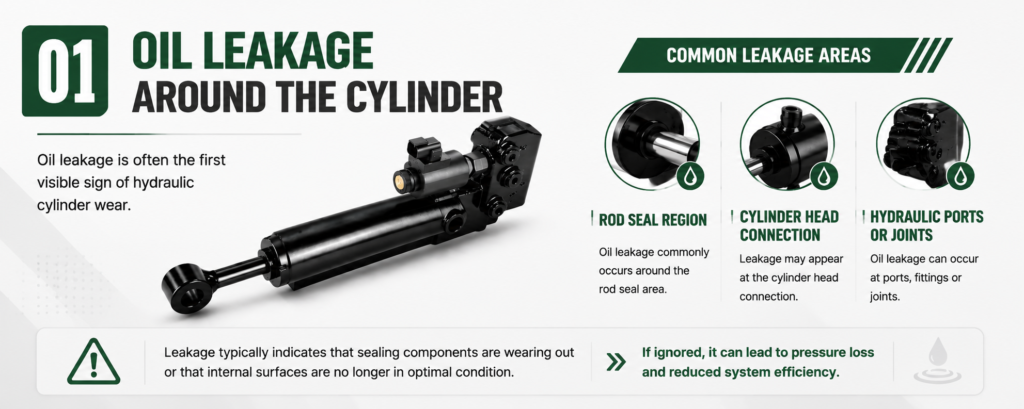
Oil leakage is often the first visible sign of hydraulic cylinder wear.
It commonly appears in areas such as:
- Rod seal region
- Cylinder head connection
- Hydraulic ports or joints
Leakage typically indicates that sealing components are wearing out or that internal surfaces are no longer in optimal condition.
If ignored, it can lead to pressure loss and reduced system efficiency.
Loss of Stable Pressure Performance
A properly functioning hydraulic cylinder should maintain consistent force throughout operation.
When wear occurs, common symptoms include:
- Reduced or unstable operating force
- Inconsistent down force during planting
- Gradual pressure drop when the system is idle
These issues directly affect planting consistency and row unit stability.
Jerky or Unstable Movement
Smooth and controlled movement is essential for planter performance.
Worn cylinders may show:
- Jerking during extension or retraction
- Delayed response during operation
- Irregular speed control
These symptoms are often related to internal seal wear or surface damage inside the cylinder.
Inconsistent Performance Across Rows
In planter row unit systems, multiple cylinders work together to maintain uniform force.
When one cylinder begins to wear, it can cause:
- Uneven planting depth between rows
- Irregular soil contact
- Variations in crop emergence
This is one of the most critical issues in precision planting applications.
Abnormal Heat Build-Up
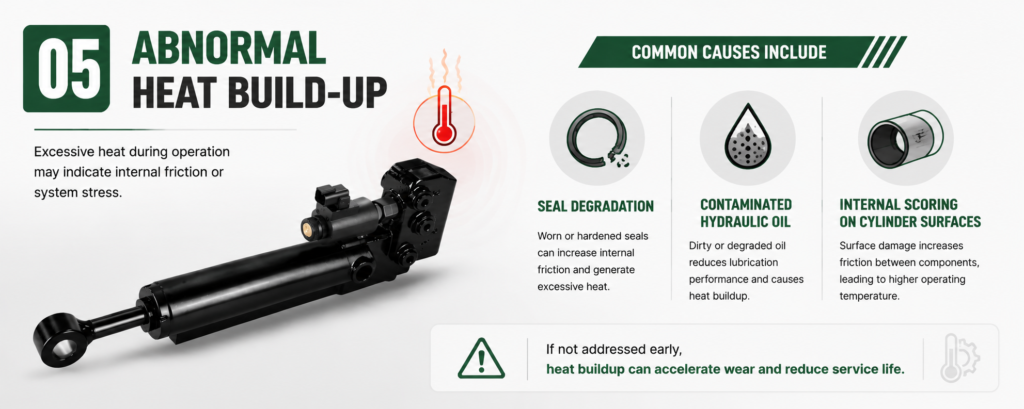
Excessive heat during operation may indicate internal friction or system stress.
Common causes include:
- Seal degradation
- Contaminated hydraulic oil
- Internal scoring on cylinder surfaces
If not addressed early, heat buildup can accelerate wear and reduce service life.
Damage on Piston Rod Surface
The piston rod should always maintain a smooth, chrome-plated surface.
Warning signs include:
- Scratches or scoring marks
- Corrosion spots
- Discoloration or uneven coating
Rod damage often leads to rapid seal failure and recurring leakage issues.
Increasing Maintenance Frequency
A rising need for maintenance is often a strong indicator of cylinder wear.
Typical symptoms include:
- Frequent seal replacement
- Repeated oil refilling
- Declining performance over short intervals
At this stage, replacement is usually more economical than continuous repair.
Impact on Planter System Performance
A worn hydraulic cylinder can significantly reduce planter efficiency and agricultural output.
Common effects include:
- Reduced seed placement accuracy
- Inconsistent planting depth
- Poor emergence uniformity
- Increased machine downtime during planting season
These issues can directly affect overall yield performance in large-scale farming operations.
Replacement & OEM Support Solutions
When wear symptoms appear, replacing the hydraulic cylinder is often the most reliable solution to restore system performance.
AiSoar provides OEM and replacement hydraulic cylinders for agricultural planter systems, including precision planting applications.
Our solutions include:
- Direct replacement compatibility with planter systems
- Custom bore and stroke configurations
- High-performance sealing systems
- Durable rod surface treatment for field conditions
- Stable operation under long working cycles
Why Early Detection Is Important
Identifying wear symptoms early can help:
- Prevent unexpected equipment failure during planting season
- Maintain consistent planting performance across fields
- Extend overall equipment service life
- Reduce long-term maintenance and repair costs
Preventive maintenance plays a key role in modern precision agriculture efficiency.
Conclusion
Hydraulic cylinder wear often develops gradually, but its impact on planter performance can be significant if not addressed in time.
By monitoring early warning signs such as leakage, pressure loss, and irregular movement, operators can maintain stable machine performance and reduce operational risks.
For agricultural equipment manufacturers and users, selecting high-quality replacement hydraulic cylinders is essential for ensuring long-term reliability in field operations.


