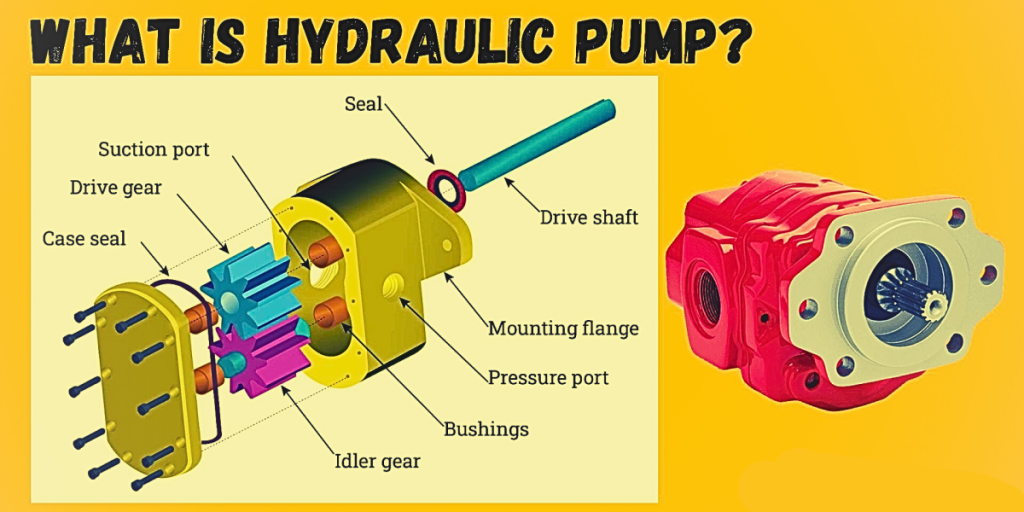
A hydraulic pump plays a pivotal role in any hydraulic system, serving as the crucial link between mechanical power and hydraulic energy. Its primary function is to convert the rotational or mechanical force supplied by a motor (also known as the prime mover) into a steady flow of pressurized hydraulic fluid, powering the system’s actuators, cylinders, or motors.
It’s essential to understand that a hydraulic pump in itself does not generate pressure. Instead, it is responsible for creating continuous fluid flow within the hydraulic circuit. The actual system pressure develops due to resistance in the hydraulic lines or components; this resistance restricts the path of the fluid, thereby forcing pressure to build up according to the system’s design requirements.
To illustrate, consider a scenario where the pump’s outlet is fully open to a low-resistance path: here, the fluid flows freely, and the pressure gauge will register little to no pressure. Conversely, if the system’s outlet is partially restricted, the resistance increases, causing the pressure gauge to display elevated pressure readings. If the outlet is completely blocked, the trapped fluid cannot exit, potentially resulting in dangerous pressure build-up that can damage the pump or system components.
Classification of Hydraulic Pumps
Hydraulic pumps fall into two broad categories: positive displacement pumps (hydrostatic pumps) and non-positive displacement pumps (hydrodynamic pumps). The main distinction lies in the method by which they move hydraulic fluid and generate pressure.
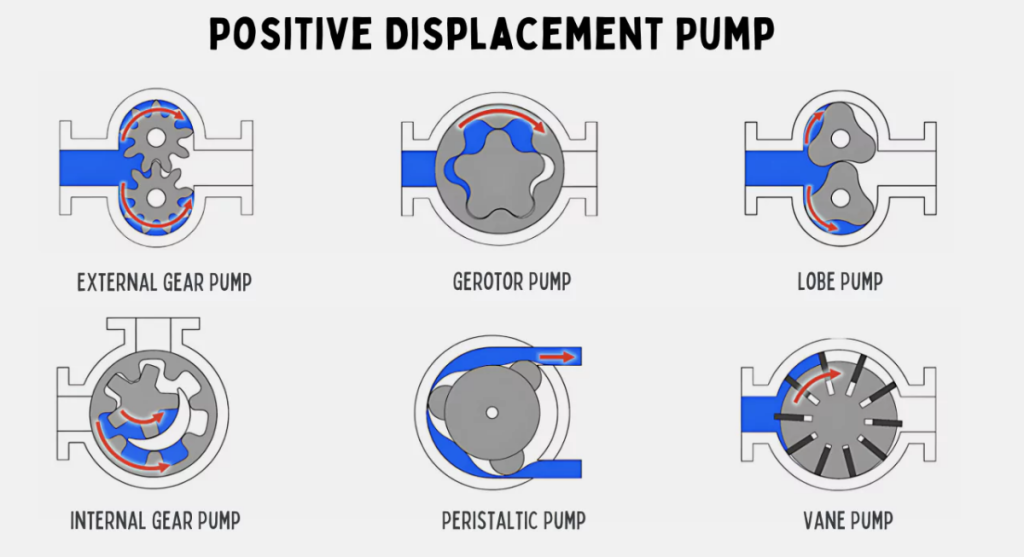
Positive displacement pumps are the backbone of most hydraulic systems due to their ability to deliver a fixed volume of fluid with every cycle, regardless of outlet pressure (within design limits). These pumps work by trapping fluid within a chamber and forcing it from the inlet side to the outlet using precise mechanical movement. Because of the tight tolerances between moving components, positive displacement pumps can self-prime—drawing fluid into the pump even if the inlet is not flooded. This design minimizes internal leakage, allowing these pumps to reliably generate the high pressures required in demanding hydraulic applications. Positive displacement pumps are further divided into fixed displacement (delivering a constant flow per cycle) and variable displacement designs (adjusting flow based on system demand by modifying the chamber volume during operation).
In contrast, non-positive displacement pumps create flow by imparting kinetic energy to the fluid, which is then partially converted into pressure. The most common example is the centrifugal pump, often used for circulating fluids at higher volumes but lower pressures than those produced by positive displacement types. Unlike their positive displacement counterparts, non-positive displacement pumps allow for significant slippage—fluid can “slip” backwards, especially as outlet pressure rises. As a result, their output is highly dependent on system resistance: increase the outlet pressure and flow drops; decrease it and flow rises. This characteristic makes them well-suited for low-pressure, high-flow applications where the flow rate needs to automatically adjust to changing system conditions. In hydraulic systems requiring precise control and consistent pressure, positive displacement pumps are preferred.
Choosing between positive and non-positive displacement pumps is a critical step in hydraulic system design, as it affects efficiency, safety, and system reliability.
Types of Positive-Displacement Pumps
Positive-displacement pumps are essential for hydraulic systems that demand precise, consistent flow and high pressures. There are several main types of positive-displacement pumps, each with unique construction, operating principles, and common applications.
1. Gear Pumps
Gear pumps are the most common type of fixed displacement pump, widely used for their simplicity and durability. They operate using two meshing gears—either external or internal—which rotate to move fluid from the inlet to the outlet. Gear pumps are known for their compact size, steady flow, and ease of maintenance. They are ideal for low- to medium-pressure hydraulic systems, such as in industrial machinery and agricultural equipment.
2. Vane Pumps
Vane pumps utilize a rotor with extendable vanes that slide in and out, trapping fluid and transporting it around the pump casing. These pumps can be fixed or variable displacement, offering adjustable output. Vane pumps distinguish themselves with quiet operation and reliable performance in medium-pressure applications. They are often found in presses, injection molding machines, and mobile hydraulic equipment.
3. Piston Pumps
Piston pumps are divided into axial piston and radial piston designs.
- Axial piston pumps have cylinders arranged in a parallel pattern around a central shaft; pistons move in and out as the shaft rotates, drawing in and expelling fluid.
- Radial piston pumps arrange their cylinders perpendicularly to the shaft for extremely high-pressure capabilities.
Piston pumps are well-suited to variable displacement operations and can handle both high pressure and flow modulation. Their efficiency and ability to withstand demanding conditions make them the top choice for heavy-duty hydraulic systems, such as in excavators, construction vehicles, and high-performance industrial equipment.
4. Screw Pumps
Screw pumps feature two or more intermeshing screws that continuously move fluid along their axis. This design is ideal for handling large volumes and viscous fluids at moderate pressures with exceptionally smooth flow. Screw pumps are used where pulsation-free delivery is critical, such as lubrication systems and offshore hydraulic applications.
Routine Maintenance of Hydraulic Pumps
Routine Maintenance of Hydraulic Pumps
Proper maintenance is critical for ensuring the longevity and optimal performance of any hydraulic pump. Below are essential routine maintenance steps, structured for ease of implementation and maximum efficiency:
1. Fluid Inspection and Management
Regularly monitor hydraulic fluid levels to prevent pump cavitation and overheating.
Check oil cleanliness and viscosity: Contaminated or degraded hydraulic fluid accelerates internal wear, reduces efficiency, and may cause pump failure.
2. Filter Checks
Inspect suction and return line filters periodically.
Replace filters as per the manufacturer’s schedule or sooner if differential pressure readings suggest partial clogging. Clean filters help prevent abrasive particles from damaging pump internals.
3. Visual and Operational Inspections
Conduct scheduled inspections for external leaks, as undetected leaks indicate seal breakdown or loose fittings.
Listen for odd noises such as knocking, whining, or grinding, which may signal internal component wear.
Monitor temperature: Unexplained temperature spikes can indicate blockages, poor lubrication, or excessive friction.
Check for reduced flow rates, as these may reveal developing pump or system issues.
4. Environmental Control
Keep the pump installation area clean to reduce the risk of dust and debris entering the system.
Minimize contamination by ensuring all fittings and reservoirs are sealed and using proper fluid transfer equipment.
Conclusion
Comprehensive knowledge of how hydraulic pumps work, their classification, correct selection, and regular maintenance is the foundation for reliable hydraulic systems. From comparing gear vs piston pump options to zeroing in on the best hydraulic pump for an excavator, every decision depends on application-specific needs and careful evaluation via a hydraulic pump selection guide. Diligent attention to pump maintenance protects your investment and guarantees performance. For complex systems and high-stakes applications, always consult with a hydraulic specialist to ensure you get a tailored, cost-effective, and lasting pump solution. The right hydraulic pump is central to your operation’s success—make your choice with confidence and clarity.