
According to the action mode of the hydraulic cylinder, it can be divided into: single-acting hydraulic cylinder and double-acting hydraulic cylinder.
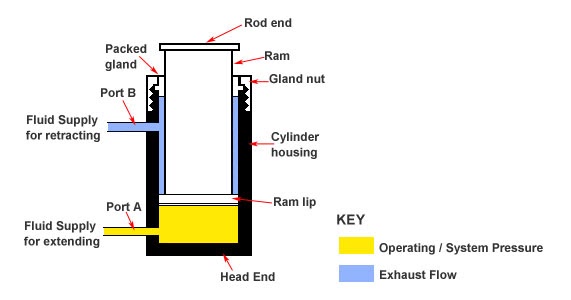
The pressure in the single-acting hydraulic cylinder can only be the one-way movement of the piston (or plunger), and the movement in the opposite direction must be realized by external force (spring or dead weight); the double-acting hydraulic cylinder can have hydraulic pressure to realize the movement in two directions.
Sealing law of double-acting telescopic sleeve hydraulic cylinder: The double-acting telescopic sleeve hydraulic cylinder relies on the pressure oil to make the cylinder barrel extend several sections. It realizes the load-bearing lifting, and the cylinder barrel relies on its own weight when retracting.
Analysis of oil leakage caused by the original YX seal ring: The seals of double-acting sleeve hydraulic cylinders generally use YX type polyurethane seal rings at home and abroad, which have the advantages of high pressure resistance, wear resistance, and high strength.
The double-acting oil cylinder is an oil cylinder that can input pressure oil from both sides of the piston. The double-acting cylinder actuator is the main output device of the hydraulic motion system. Although there are differences in size, type and design structure, this part is usually the most observable part. These actuators convert hydraulic pressure into fast, controllable linear motion or force to drive the load.
In a typical double-acting cylinder, the force generated when the piston extends is slightly greater than the force of contraction. Although the pressure received on each piston is the same, the effective area exposed to the hydraulic fluid is different, so the force is also different.
If you have any further questions about hydraulic cylinders, please contact email: [email protected] or contact us.