
What is a hydraulic system?
Hydraulics is a drive technology in which fluid is used to transfer energy from an electric motor (such as an electric motor) to a drive (such as a hydraulic cylinder). Fluids are theoretically incompressible, and the fluid path can be as flexible as a cable.
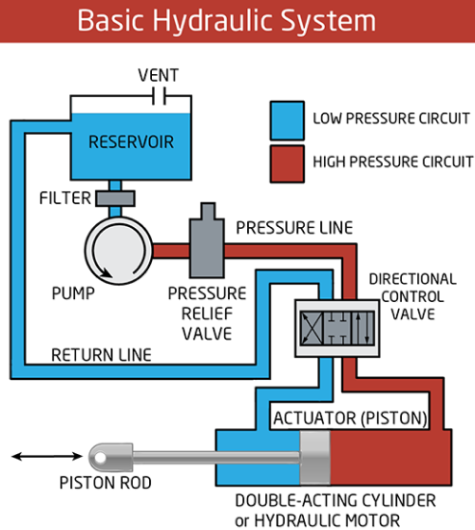
What is the purpose of the hydraulic system?
Hydraulic systems are mainly used where high power density is required or where load requirements change rapidly. This is especially true in various mobile equipment such as excavators and industrial systems such as presses.
In wind turbines, hydraulic pressure is used to control pitch and braking. In some cases, different auxiliary systems such as hatches and cranes are also powered by hydraulics.
Why use a hydraulic system?
The main reason for using hydraulics is high power density, and secondly, simplicity comes from using few components for complex and fast-moving machines and a high degree of safety.
How Does a Hydraulic System Work?
Hydraulic systems are made up of four components. There are liquid, apply the pressure, and convert the energy generated into mechanical energy for practical use.
There are also many types of hydraulic systems, but each contains the same major components listed above. They are also all designed to work the same way.
Hydraulic systems use pumps to push hydraulic fluid through the system to generate fluid power. The fluid passes through the valve and flows to the hydraulic cylinder, where the hydraulic energy is converted back into mechanical energy. These valves help direct the flow of fluids and relieve pressure when needed.
If you have any further questions about hydraulic cylinders and hydraulic system, please contact email: [email protected] or contact us.