
Understanding Hydraulic Cylinder Load Capacity and Pressure Ratings
Hydraulic cylinders are crucial components in various industrial and heavy machinery applications, providing the force needed to perform tasks such as lifting, pushing, pulling, and holding loads. Two key factors that determine a hydraulic cylinder’s performance are its load capacity and pressure ratings. Understanding these parameters is essential for selecting the right hydraulic cylinder for your application and ensuring safe and efficient operation. In this blog, we will delve into the concepts of load capacity and pressure ratings, explaining their importance and how to determine the appropriate specifications for your hydraulic system.
What is Load Capacity?
Load capacity, also known as lifting capacity, refers to the maximum load a hydraulic cylinder can handle. This capacity is determined by several factors, including the cylinder’s bore size, rod diameter, and the hydraulic pressure applied.
Bore Size: The bore size is the internal diameter of the cylinder. A larger bore size allows for greater surface area for the hydraulic fluid to act upon, resulting in higher force generation.
Rod Diameter: The rod diameter impacts the cylinder’s structural integrity and ability to handle compressive and tensile loads. A larger rod diameter generally means a higher load capacity.
Hydraulic Pressure: The hydraulic pressure is the force exerted by the hydraulic fluid per unit area. Higher hydraulic pressure can increase the force generated by the cylinder, thus increasing its load capacity.
The formula to calculate the theoretical load capacity (force) of a hydraulic cylinder is:
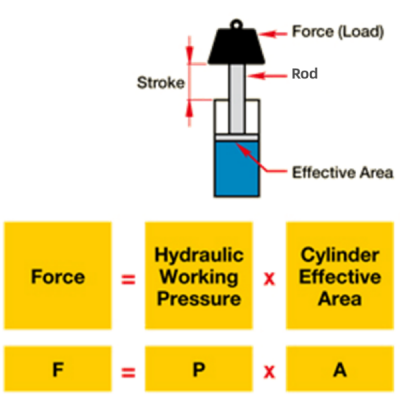
Force(F)=Pressure(P)×Area(A)
Where:
F is the force in pounds (lbs) or Newtons (N),
P is the hydraulic pressure in pounds per square inch (psi) or Pascals (Pa),
A is the effective area of the piston in square inches (in²) or square meters (m²).
Understanding Pressure Ratings
Pressure ratings indicate the maximum pressure that a hydraulic cylinder can safely withstand during operation. These ratings are crucial for ensuring the cylinder’s durability and preventing failure due to overpressure. Pressure ratings are typically expressed in terms of:
Operating Pressure: The maximum continuous pressure that the cylinder can handle during normal operation without risk of damage.
Proof Pressure: A higher pressure level that the cylinder can withstand temporarily during testing without experiencing permanent deformation or damage.
Burst Pressure: The maximum pressure at which the cylinder will fail or burst. Burst pressure is usually several times higher than the operating pressure to ensure safety.
Selecting a hydraulic cylinder with appropriate pressure ratings is vital for system safety and performance. Using a cylinder beyond its rated pressure can lead to leaks, component damage, and catastrophic failure.
Factors Affecting Load Capacity and Pressure Ratings
Several factors influence the load capacity and pressure ratings of hydraulic cylinders:
Material Quality: The quality and strength of materials used in the construction of the cylinder components, such as the barrel, piston, and seals, affect its load capacity and pressure ratings.
Cylinder Design: The design and construction of the cylinder, including the thickness of the cylinder walls and the design of the seals, play a significant role in determining the pressure ratings.
Operating Conditions: The environment in which the hydraulic cylinder operates, including temperature, exposure to corrosive substances, and load cycling, can impact its performance and longevity.
Maintenance Practices: Regular maintenance and inspection are crucial for ensuring that hydraulic cylinders operate within their rated capacities and pressures. Proper lubrication, seal replacement, and timely repairs can prevent overloading and overpressure situations.
Tips for Selecting the Right Hydraulic Cylinder
Determine Load Requirements: Calculate the maximum load your application will encounter and select a hydraulic cylinder with a load capacity that exceeds this requirement to ensure a safety margin.
Assess Hydraulic Pressure: Understand the hydraulic pressure your system operates at and choose a cylinder with pressure ratings that match or exceed this pressure.
Consider Application Specifics: Take into account the specific requirements of your application, such as stroke length, mounting type, and environmental conditions, to ensure the selected cylinder meets all operational needs.
Consult with Experts: If you’re unsure about the appropriate specifications for your hydraulic cylinder, consult with manufacturers or hydraulic system experts who can provide guidance based on your application’s requirements.
Conclusion
Understanding hydraulic cylinder load capacity and pressure ratings is essential for selecting the right cylinder for your application and ensuring safe, efficient operation. By considering factors such as bore size, rod diameter, hydraulic pressure, material quality, and operating conditions, you can choose a hydraulic cylinder that meets your needs and performs reliably under various conditions. Proper selection, regular maintenance, and adherence to manufacturer guidelines will help maximize the lifespan and performance of your hydraulic cylinders, contributing to the overall success of your hydraulic systems.