
Stainless steel is currently used in a wide range of industries and applications. Popular applications include architectural design, naval equipment, oil/gas pipelines, and automobile components.
Stainless steel piston rods are a subgroups of that, with a variety of shapes and sizes available, including round, flat, square, and hexagonal bars. We will help you to learn more about the definition, quality, properties, and applications of stainless steel piston rods.
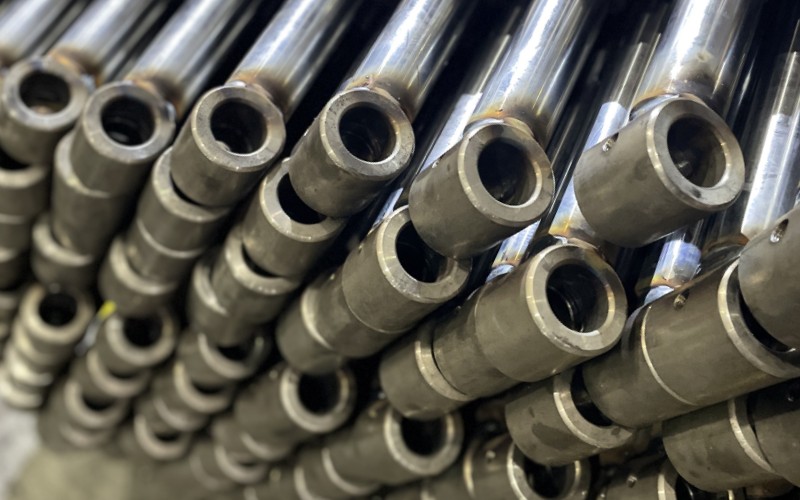
Definition of Stainless Steel Piston Rod:
Piston rod stock is almost as varied as steel industry output, however some types are more common than others.
Other methods are used to supplement the rod inventory. According to Hart, the majority of large diameter piston rods are induction hardened to improve impact resistance. If an end-user repeatedly breaks male rod threads, this stronger alloy can help extend the cylinder’s life.
The most common bar stock material is 75 kpsi 0.0005-in. There are also numerous other options. A steel piston rod’s tensile strength can be increased to 100 kpsi, and the chromium content can be increased to 0.001 percent.
Stainless Steel Piston Rod Applications: Stainless steel bars are classified as either hot rolled or cold drawn. Hot-rolled bars have a rougher surface than drawn bars. These bars are only utilized for their strength and corrosion resistance.
Stainless Steel Piston Rod Used:
Stainless steel piston rod bars are used in adornment and outdoor fixtures. Cold-drawn bars are preferred for their flat surface. One type of cold-drawn bar is a stainless steel piston bar, which is a type of stainless steel round bar. In stainless steel piston high-quality bars, the radius spans from 6mm to 100mm.
Stainless steel piston rod bars are offered in two varieties: hot rolled and cold drawn. Hot-rolled bars have a rougher surface than drawn bars.
Characteristics of Stainless Steel Piston Rod:
Hard Chrome:
Hardened steel is used to make piston rods, and metal spray is used in the packing portions to increase rod life. Pistons can be made from any of these materials: steel, cast nodular iron, or aluminum. Due of its longevity, cast iron is the most popular material. Piston Rods have coatings that are 23–30 microns thick.
Plating Thickness:
The main components of a hydraulic cylinder that frequently move are the piston and piston rod. The rod experiences severe wear and tear as a result of the continuous back and forth motion.
Corrosion Resistance:
A refined stainless steel structure is represented by a stainless steel piston rod that ensures high quality and resistance to corrosion. These rods are produced using state-of-the-art technology and the best factor inputs.