Mini Excavator Hydraulic Cylinder Solution
Trusted OEM Supplier for Precision Performance & Competitive Cost
Mini excavators are compact, efficient machines widely used in construction, agriculture, landscaping, and urban development. But their reliability and performance depend heavily on one critical system: hydraulic cylinders.
At AISOAR, we specialize in manufacturing custom hydraulic cylinders for mini excavators. With over 25 years of OEM experience, we help manufacturers, dealers, and distributors solve key challenges in cost, quality, and supply.
Hydraulic cylinders play a vital role in the functioning of excavators, with different types suited for specific functions. These include the boom, arm, and bucket cylinders. Understanding these parts is key to optimizing performance and avoiding costly repairs.
To dive deeper into how these cylinders function, let’s explore the specific types of hydraulic cylinders in excavators and their common issues.
🛠️Common Hydraulic Cylinders Used in Mini Excavators
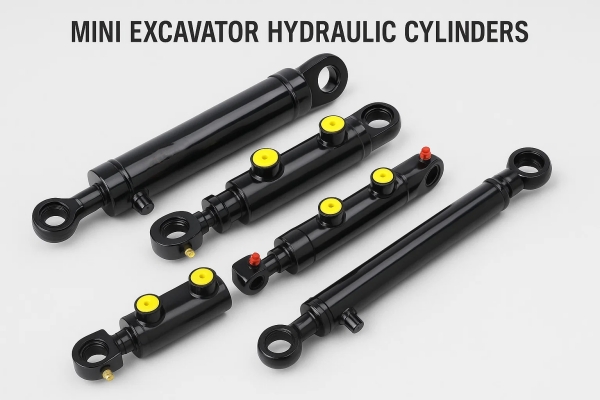
Excavators typically have four main hydraulic cylinders: one for the boom, one for the arm, one for the bucket, and one for the swing. Each cylinder is responsible for controlling a specific part of the excavator’s movement. The boom lift cylinder, for example, raises and lowers the boom, which is the large arm of the excavator. The arm and bucket cylinders are responsible for the movement of the arm and bucket, respectively. Additionally, some excavators may also have auxiliary cylinders for specific attachments or functions.
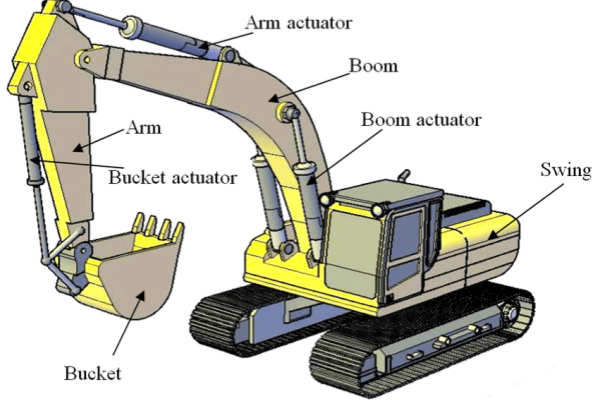
A mini excavator typically requires the following hydraulic cylinders:
-
Boom Cylinder – Controls the up and down movement of the boom.
The boom cylinder is one of the largest and most powerful hydraulic cylinders on a mini excavator. This cylinder generates a large amount of force to lift and position the boom, which is essential for reaching higher or deeper excavation sites. -
Arm (Dipper) Cylinder – Extends and retracts the dipper arm for digging.
The bucket cylinder is responsible for providing the power required to move the bucket, which is located at the end of the bucket arm. This hydraulic cylinder is typically smaller in size compared to other cylinders, but it is crucial for controlling the angle of the bucket during excavation. -
Bucket Cylinder – Moves the bucket for scooping and dumping.
The bucket cylinder is responsible for providing the power required to move the bucket, which is located at the end of the bucket arm. This hydraulic cylinder is typically smaller in size compared to other cylinders, but it is crucial for controlling the angle of the bucket during excavation. -
Blade Cylinder (if equipped with a dozer blade) – Raises and lowers the dozer blade.
The dozer cylinder is responsible for controlling the movement of the dozer blade, a key component at the front of the mini excavator. This blade is used for pushing materials such as dirt, sand, or gravel. The dozer cylinder also helps stabilize the excavator during operation, especially when working on uneven surfaces. -
Swing Cylinder (in select models) – Rotates the upper structure.
The swing cylinder, also known as the rotary cylinder, controls the rotation of the upper part of the excavator around its vertical axis. This rotation allows the operator to change the direction of the boom and bucket, which is crucial for precise operation in tight spaces or for digging in multiple directions.
🎯Your Challenges — Our Solution
| Your Challenge | AISOAR Solution |
| Price pressure & tight margins | Factory-direct pricing with no middlemen |
| Unstable lead times | Fast production and global shipping |
| Varying equipment specification | Full OEM/ODM customization |
| Reliability issues | Durable design, tested seals & high-strength materials |
| Technical support gap | Drawings, specs, and support from engineering team |
⚙️ Why Choose AISOAR?
✅ Over 25 Years of Manufacturing Expertise
✅ Custom-Built Cylinders for All Mini Excavator Brands
✅ High-Strength Steel & Honed Tubes
✅ Competitive Factory Prices
✅ OEM/ODM Service
✅ Fast Response & Global Delivery