
Introduction
Synchronizing hydraulic cylinders ensures uniform movement and prevents structural stress on machinery. This can be achieved using various methods, such as mechanical linkages, flow dividers, or electronic feedback systems with sensors. Mechanical linkages provide basic synchronization, while flow dividers ensure equal oil distribution to each cylinder. For high precision, electronic systems monitor cylinder positions in real-time and adjust flow accordingly. Proper synchronization enhances operational efficiency, prevents uneven loads, and reduces wear on hydraulic components. Regular maintenance and calibration are essential to maintain synchronization accuracy over time.
Some types of equipment require multiple hydraulic cylinders to extend and retract simultaneously, a process known as synchronization. However, synchronizing the movements of hydraulic cylinders is not always straightforward. There are two main methods to create synchronized hydraulic systems: connecting the cylinders with mechanical hardware or using smart sensors to create a fully automated position-detection system.
What is the purpose of synchronizing cylinder movement?
Synchronized hydraulic cylinders are used to lift a load with two or more lifting points. Synchronizing the movement of the cylinders enables precise and accurate operations in most work environments, contributing to safer operations. Heavier loads and equipment involving complex movements, such as agricultural seeders or plow wings, can move faster and more efficiently.
Synchronizing cylinders with external mechanical hardware
The traditional method for synchronizing hydraulic cylinders is by installing mechanical hardware. External components connect the hydraulic cylinders, synchronizing their movements to provide greater lifting capacity. Depending on the type of machinery, the cylinders may be connected through:
– The existing equipment structure
– Racks and pinions
– Crankshafts
– Cables and pulleys
– Chains and gears
– And other methods
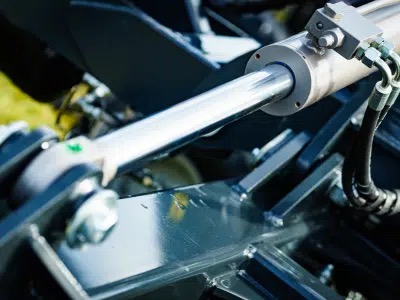
Although mechanical means are the most common way to synchronize cylinder movements, they come with certain limitations. The most notable is that when the cylinders lose synchronization, the operator must intervene to re-synchronize them. This process leads to downtime for troubleshooting and maintenance, interrupting workflow and creating other consequences.
Position-sensing cylinders: Improvements in synchronized hydraulic systems
In applications where mechanical connections are not possible, recommended, or allowed, the best way to synchronize hydraulic cylinders is by installing and using position-sensing cylinders. These high-tech options provide precise electronic feedback, allowing for constant synchronization without operator intervention. Sometimes referred to as “smart cylinders,” position-sensing cylinders are the ideal solution for equipment that requires synchronized movements.
Position-sensing cylinders are commonly used in industries handling complex equipment, such as:
– Material handling machinery
– Multi-stage agricultural equipment
– Mining applications
– Entertainment platforms
– And many more!
How to synchronize cylinder movement using smart sensors
Unlike systems that use mechanical links to achieve cylinder synchronization, position-sensing cylinders use electronic feedback to signal the relevant valves when to open and close. All the system’s sensors communicate with each other, and the cylinders always know where they are relative to one another. If one cylinder moves ahead, the valve will close and automatically bring it back into synchronization.
The exact operations vary depending on the specifications and configuration of the position-sensing cylinders. For example, a system composed of proportioning hydraulic cylinders will operate differently from a series of standard double-acting cylinders. For assistance in selecting the best hydraulic cylinders for your equipment, contact us.
Advantages of using smart sensors to synchronize hydraulic cylinders
Using sensors to synchronize cylinder movements provides many benefits for industrial and mobile equipment, including:
– Explosion-proof and intrinsically safe cylinder constructions
– Automatic re-synchronization, minimizing downtime and reducing the chances of human error or injury
– The ability to control the stroke of each lifting point, achieving greater precision and synchronization
– All operations are monitored, managed, and controlled from a central point, allowing real-time updates
– Precise operations that optimize workflow for better performance
– And many more advantages!
Common concerns when synchronizing hydraulic cylinders with sensors
The primary concern when choosing smart sensors for synchronizing hydraulic cylinders is their higher acquisition cost. For manufacturers and OEMs prioritizing budget constraints, mechanical synchronization may seem tempting as these systems are more affordable to install. However, sensors quickly compensate for the higher initial cost through reliable readings, automatic synchronization correction, and other benefits.
Oil cleanliness is another important aspect to consider when synchronizing cylinders with position sensing. Electronic connections are susceptible to corrosion, which can affect valve feedback, sensors, and position detection. This is particularly important when operating underground equipment, such as in mining machinery. With regular maintenance routines that include checking all fluids, replacing filters, and other measures to prevent contamination, you can ensure your cylinders operate at an optimal level for a long time.
Solutions for synchronizing hydraulic cylinders
Most position-sensing cylinders will be designed according to your specifications, and the exact capabilities will vary. For example, Aisoar Hydraulic offer many design advantages and options, such as:
– Stroke lengths up to 300” (7620 mm)
– Hydraulic pressure up to 5000 PSI (345 bar)
– Temperature ranges from -40°F to 221°F (-40°C to 105°C)
– Circular, cable, or Deutsch connectors
– Analog outputs (4-20mA, 0.5-4.5Vdc, or 0-10Vdc) or digital (CAN, SSI, Ethernet)
– Sensor technology types: magnetostrictive, Hall effect, resistive, or inductive
– IP67, IP68, or IP69K ingress protection
Whatever your need, our engineering team will work with you to design and manufacture advanced position-sensing cylinders to synchronize your system. **Contact us or request a quote today to get started.
If you have more questions about hydraulic cylinders, please contact us via email at [email protected] or reach out directly.