
Introduction
Proper hydraulic hose installation and routing are critical for system efficiency and longevity. Correct routing minimizes sharp bends, kinks, and excessive strain, preventing premature hose failure. Adequate installation includes using appropriate clamps and ensuring sufficient slack to accommodate movement without over-stretching. Proper routing also reduces the risk of abrasion and exposure to high temperatures, which can degrade hose materials. Secure connections prevent leaks, ensuring optimal hydraulic pressure and performance. Following industry standards during installation improves safety, reduces maintenance costs, and prolongs the overall system lifespan.
Proper installation and routing of hydraulic hoses are crucial for the reliability, safety, and longevity of hydraulic systems. Incorrect installation can lead to premature hose failure, system inefficiencies, and even hazardous situations. This article outlines best practices for hydraulic hose installation and routing to ensure optimal system performance.
1. Understand the Application Requirements
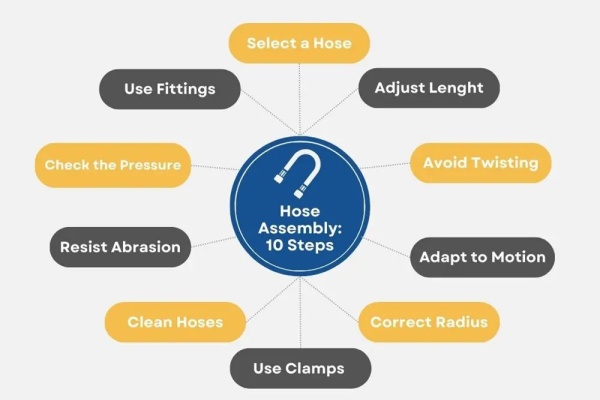
Before installing hydraulic hoses, it’s essential to understand the specific requirements of the application. This includes the system’s operating pressure, temperature, and the type of fluid used. Selecting the correct hose type based on these factors is the first step in ensuring a successful installation. The hose must meet or exceed the system’s pressure requirements and be compatible with the hydraulic fluid.
2. Proper Hose Length and Sizing
Selecting the correct hose length is critical. A hose that is too short may be overstressed during operation, while a hose that is too long can lead to unnecessary wear due to rubbing or kinking. Additionally, the hose should be the appropriate diameter to handle the required flow rate without excessive pressure drop or turbulence.
3. Avoid Twisting and Tension
Twisting hydraulic hoses during installation is a common mistake that can significantly reduce hose life. To avoid twisting, mark the hose with a line along its length to observe any twist during installation. Ensuring that the hose is not under tension when installed is equally important. Tension can occur if the hose is stretched to fit between connection points, leading to increased stress and potential failure.
4. Implement Proper Bend Radius
Hydraulic hoses should be routed with gentle curves, adhering to the manufacturer’s recommended minimum bend radius. Bending a hose tighter than this radius can cause the hose to kink, restricting flow and causing damage to the hose’s reinforcement. Properly routed hoses with smooth bends also reduce pressure loss and wear.
5. Use Clamps and Protectors
Hose clamps and protective sleeves are essential components of a proper hydraulic hose installation. Clamps should be used to secure hoses in place, preventing them from moving or rubbing against other components, which can cause abrasion. Protective sleeves or guards should be used in areas where hoses are exposed to potential damage from sharp edges, high temperatures, or other hazards.
6. Allow for Expansion and Contraction
Hydraulic hoses expand and contract slightly during operation due to pressure changes and temperature fluctuations. When routing hoses, it is important to leave some slack to accommodate these changes. However, too much slack can lead to rubbing and abrasion, so a balanced approach is necessary.
7. Prevent Abrasion and Damage
Routing hoses through areas where they may rub against surfaces, other hoses, or sharp edges should be avoided. Abrasion is a common cause of hose failure, and over time, it can weaken the hose’s outer cover, exposing the reinforcement layers and leading to leaks or bursts. Installing protective sleeves and ensuring proper routing can help mitigate abrasion risks.
8. Regular Inspection and Maintenance
After installation, regular inspection and maintenance are vital to ensuring long-term hose performance. Inspect hoses for signs of wear, leaks, and other damage. Replace hoses that show signs of aging or damage before they fail. Proper maintenance also involves checking fittings and connections for tightness and integrity.
Conclusion
Proper hydraulic hose installation and routing are key to maintaining the efficiency and safety of hydraulic systems. By following best practices such as avoiding twisting and tension, adhering to bend radius guidelines, using clamps and protectors, and regularly inspecting the hoses, operators can significantly extend the life of their hydraulic hoses and prevent costly downtime. Investing time in correct hose installation not only enhances system performance but also contributes to the overall safety and reliability of hydraulic equipment.