
What is control valve?
A control valve is a mechanical device that regulates or manipulates the flow of fluids such as gas, oil, water, and steam.
It is an example of a final control element and is an important aspect of a control loop. By far the most frequent final control device utilized in industry today is the control valve.
Control valve actuator
A control valve can be operated electrically, pneumatically, or hydraulically.
A control valve receives a signal from a controller such as a PLC in order for it to move resulting in a change in flow.
Because the PLC signal is electrical, the control valve may require a device to convert that electrical signal so that it can operate.
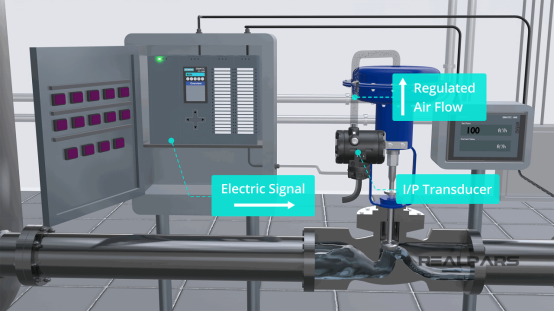
A control valve has two separate components: the Valve and the Actuator.
Control valve body
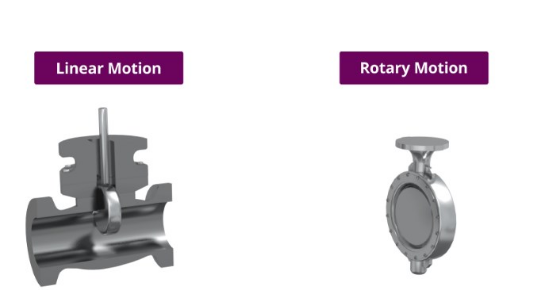
Valve bodies come in a variety of shapes and sizes, based on the service conditions, pipe architecture, and desired use.
Linear Motion and Rotary Motion are the two types of control valves.
Control valve operation
The actuator is the device connected to the valve through the valve stem that provides the force required to move the valve.
The actuator can be managed electrically, pneumatically, or hydraulically, as we just mentioned. The “Pneumatic Actuator” is the most widely used and trustworthy.
The control valve requires a signal from a controller like a PLC or a DCS to operate . The controller compares the actual flow rate to the setpoint, which is the desired flow rate. To bring the flow rate to the setpoint value, the controller will provide an output to move the valve.
Control valve fail-safe mode
Because of the design of pneumatic actuators, a control valve may fail in a specific place in the event of a loss of the control signal.
The rubber diaphragm presses against the spring as the supply air pressure rises, lowering the valve stem into the valve body.
The spring will pull the valve stem out of the body as the supply air pressure is lowered.
In the event of a signal loss, the control valve is located according to the fail-safe mode. There are various fail-safe modes for control valves, depending on the application for which they are used.
The actuator causes the valve to close in a Fail-Closed Control Valve.
The actuator causes the valve to open in a Fail-Open Control Valve.
In order for the actuator to function normally, it has to exceed the spring’s force.
In the case that the actuator loses power, the spring pressure opens the valve instead of the electrical or pneumatic force.
Summary
Let we review, then.
The flow of a liquid or gas utilized in a process can be changed by a control valve, as we have learnt in this article.
A fail-safe form of valve can be used in vital regions, and there are two primary types of control valves: linear and rotary.
Lastly, we described the PID instructions used in the PLC or DCS system to control valves.
Please let us know in the comments area if you would like more training on a related topic.
Got a friend, client, or colleague who could use some of this information? Please share this article.