Độ tin cậy của xi lanh thủy lực nhiệt độ cao không thể chỉ được đánh giá qua xếp hạng nhiệt độ của các vòng đệm.
Ngay cả khi một xi lanh sử dụng các vòng đệm FKM, PTFE hoặc polyurethane nhiệt độ cao, nó vẫn có thể phát sinh sự rò rỉ, trôi, kéo hoặc hư hỏng vòng đệm sớm nếu các khoảng trống, hướng dẫn, đệm, chất lỏng thủy lực hoặc chu trình hoạt động trong trạng thái nóng không phù hợp.
Vì vậy, một bài kiểm tra hoàn chỉnh nên tái tạo nhiệt độ dầu, áp suất, tốc độ, tải trọng và tần suất chu kỳ thực tế càng sát với khả năng nhất. Kết quả cũng nên được so sánh với hiệu suất ở nhiệt độ phòng.
Thiết lập một cơ sở nhiệt độ phòng
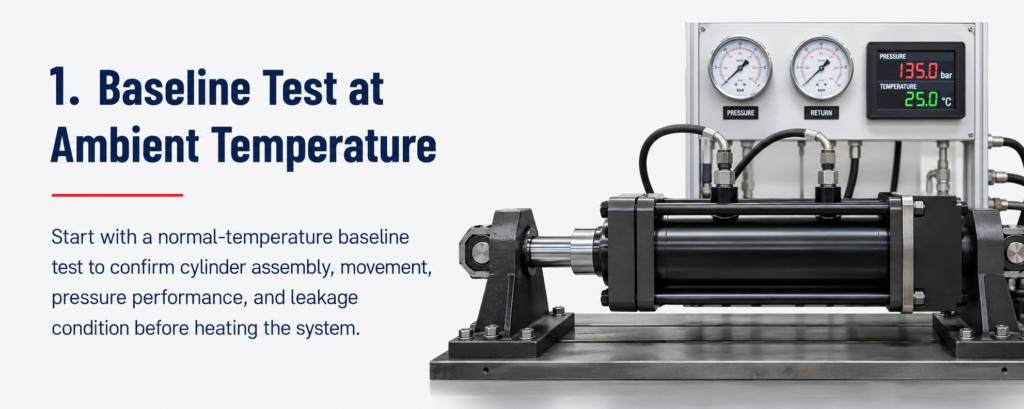
Trước khi làm nóng dầu, hãy kiểm tra xi lanh dưới điều kiện nhiệt độ phòng bình thường. Điều này xác nhận rằng không có vấn đề rõ ràng nào về gia công, lắp ráp, căn chỉnh hoặc niêm phong trước khi bài kiểm tra nhiệt độ cao bắt đầu.
Cơ sở này thường nên bao gồm:
- Chu kỳ không tải
- Áp suất khởi động tối thiểu
- Kiểm tra áp suất làm việc và áp suất chứng nhận
- Kiểm tra giữ áp suất
- Kiểm tra rò rỉ bên trong và bên ngoài
- Gối đệm và chuyển động tốc độ thấp
Ghi lại thời gian mở rộng và thu hồi, nhiệt độ dầu, áp suất, độ ổn định chuyển động, tiếng ồn và rò rỉ.
Các giá trị này cung cấp một tham chiếu để đánh giá các thay đổi sau khi xi lanh trở nên nóng. Thiếu dữ liệu cơ sở, rất khó để xác định liệu sự thay đổi về hiệu suất có do nhiệt độ hay do một khiếm khuyết hiện có của xi lanh.
Làm nóng dầu đến nhiệt độ mục tiêu
Tăng dần nhiệt độ dầu bằng cách sử dụng hệ thống tuần hoàn, thiết bị sưởi bên ngoài, hoặc bể chứa có kiểm soát nhiệt độ.
Ống xi lanh, pít tông, đòn bẩy, ống hướng dẫn và các con dấu cần đủ thời gian để đạt được tình trạng nhiệt ổn định. Chỉ làm nóng dầu trong bể chứa mà không cho các bộ phận của xi lanh ấm lên có thể tạo ra kết quả gây hiểu lầm.
Bài kiểm tra nên bao gồm:
- Nhiệt độ dầu liên tục bình thường
- Nhiệt độ dầu liên tục tối đa
- Nhiệt độ đỉnh ngắn hạn, nếu cần thiết
Không chỉ ghi lại nhiệt độ trong bể chứa. Đo nhiệt độ tại đầu vào của xi lanh, đường ống hồi, bề mặt ống xi lanh và, nếu có thể, khu vực con dấu trên đòn bẩy.
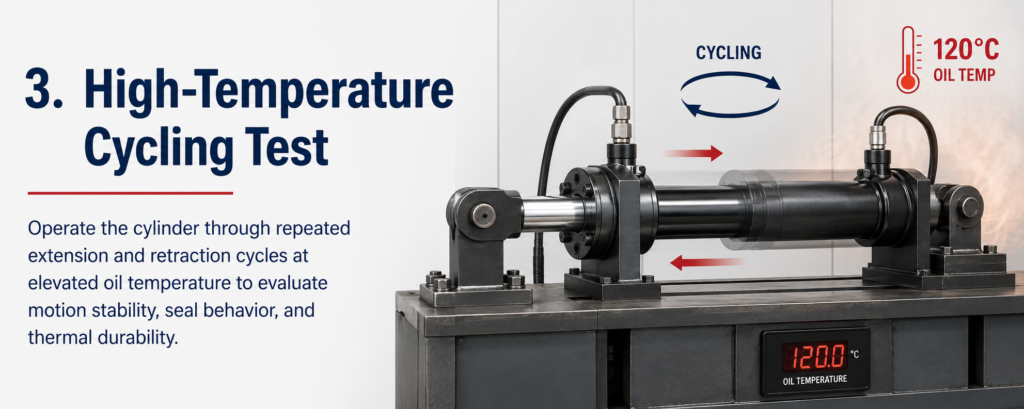
Thực hiện chu kỳ nhiệt độ cao
Khi nhiệt độ mục tiêu ổn định, hãy cho xi lanh hoạt động liên tục ở tốc độ và tần số hoạt động mong đợi.
Bài kiểm tra nên tái tạo hành trình thực tế, tải trọng, thay đổi hướng, thời gian dừng và cường độ hoạt động một cách chính xác nhất có thể.
Trong suốt bài kiểm tra, hãy quan sát:
- Thay đổi tốc độ mở rộng và thu hồi
- Sự mịn màng trong quá trình khởi động và đảo chiều
- Sự bò, rung động hoặc tiếng ồn bất thường
- Tăng nhiệt xung quanh các con dấu và khu vực hướng dẫn
- Sự thẳng hàng của đòn bẩy và tình trạng màng dầu
- Rò rỉ bên ngoài sau khi hoạt động kéo dài
Số chu kỳ cần thiết phụ thuộc vào ứng dụng. Một xi lanh được vận hành thường xuyên đòi hỏi một thử nghiệm lâu hơn và đại diện hơn so với một cái chỉ được sử dụng thỉnh thoảng.
Một vài lần vận hành không tải ở nhiệt độ mục tiêu là không đủ để xác nhận hiệu suất ở nhiệt độ cao lâu dài.
Lặp lại kiểm tra áp suất khi còn nóng
Dầu thủy lực trở nên mỏng hơn khi nhiệt độ tăng lên, trong khi một số vật liệu niêm phong có thể bị mềm.
Do đó, xi lanh nên được thử nghiệm lại ở áp suất làm việc và áp suất chứng minh quy định trong khi nóng.
Tăng áp suất từ từ và kiểm tra:
- Ống xi lanh, đáy và mối hàn
- Đầu xi lanh và con dấu tĩnh
- Cổng thủy lực và phụ kiện
- Vùng cần và hướng dẫn
- Xuyên hoặc biến dạng của con dấu
- Biến dạng của các thành phần bất thường
- Khả năng ổn định áp suất
Tải đột ngột nên được tránh vì nó có thể gây ra tác động và che giấu hành vi nhiệt thực tế của xi lanh.
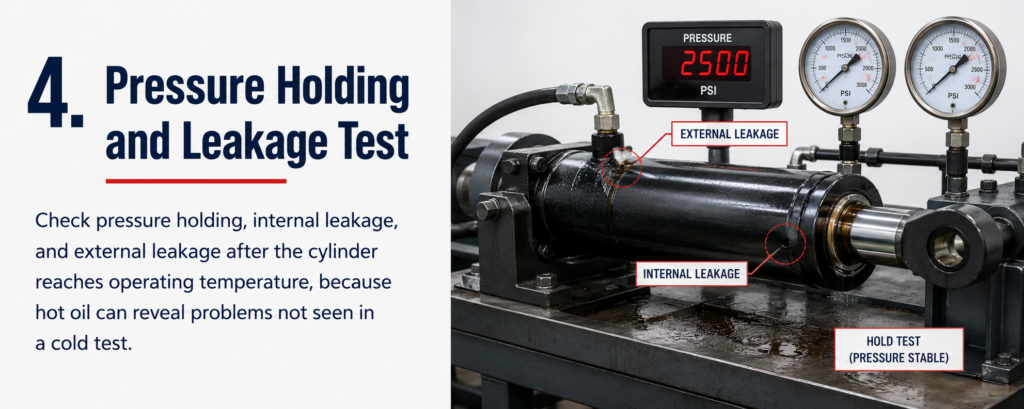
Tiến hành kiểm tra giữ áp suất trong trạng thái nóng
Đặt xi lanh ở vị trí hành trình đã chỉ định, áp dụng áp suất cần thiết, cô lập mạch và ghi lại:
- Sụt áp
- Sự dịch chuyển của thanh pít-tong
- Thời gian giữ
- Nhiệt độ dầu và xi lanh
Nếu xi lanh giữ bình thường khi lạnh nhưng cho thấy mất áp suất lớn hơn hoặc chuyển động khi nóng, các nguyên nhân có thể bao gồm tăng rò rỉ con dấu pít-tong, hiệu suất con dấu tĩnh bị giảm, khoảng trống trạng thái nóng quá mức, hoặc rò rỉ trong khối van thử nghiệm.
Mạch thử nghiệm nên được thiết kế để giảm thiểu rò rỉ van. Nếu không, rò rỉ van điều khiển có thể bị xác định sai là rò rỉ ở xi lanh.
Đo lường sự rò rỉ nội bộ
Kiểm tra rò rỉ bên trong xác định xem đệm pít-tông có thể tiếp tục phân tách hai buồng xy-lanh khi dầu nóng hay không.
Di chuyển xy-lanh đến vị trí được chỉ định, áp dụng áp suất vào một buồng, và đo lượng dầu chảy ra từ cổng đối diện.
Quy trình thử nghiệm cần xác định rõ:
- Nhiệt độ dầu
- Áp suất thử nghiệm
- Thời gian giữ
- Vị trí xy-lanh
- Tỷ lệ rò rỉ cho phép
Chỉ đơn giản quan sát xem thanh pít-tông có di chuyển hay không có thể không đủ chính xác.
Đối với các xy-lanh có yêu cầu giữ tải hoặc định vị nghiêm ngặt, hãy sử dụng thùng chứa có chia vạch, đồng hồ đo lưu lượng, hoặc thiết bị thu thập dữ liệu để ghi lại tỷ lệ rò rỉ thực tế.
Kiểm tra sự rò rỉ bên ngoài
Sau khi thử nghiệm nhiệt độ cao và thử nghiệm áp suất, hãy làm sạch xy-lanh và kiểm tra tất cả các điểm rò rỉ có thể.
Chú ý đặc biệt đến:
- Phớt thanh
- Kết nối đầu và mặt bích của xy-lanh
- Cổng thủy lực và phụ kiện
- Đế xy-lanh và các mối hàn
- Giao diện cảm biến
- Điểm xả
- Vị trí điều chỉnh đệm
Một lớp dầu bôi trơn nhẹ nên được phân biệt với tình trạng thấm liên tục hoặc nhỏ giọt.
Ghi lại vị trí rò rỉ chính xác, khi nó xuất hiện lần đầu, và liệu lượng rò rỉ có tăng lên với nhiệt độ hoặc thời gian hoạt động hay không. Một báo cáo chỉ nêu “rò rỉ” hoặc “không rò rỉ” thì giá trị cho việc cải tiến thiết kế là có hạn.
Kiểm tra đệm tại nhiệt độ hoạt động
Các xy-lanh có đệm cuối hành trình nên được thử nghiệm ở tốc độ vận hành thực tế và nhiệt độ dầu nóng.
Độ nhớt dầu thấp có thể làm thay đổi dòng chảy qua các khe hở đệm và lỗ thoát. Đệm có thể trở nên quá yếu và cho phép va chạm, hoặc hạn chế quá mức có thể tạo áp suất ngược cao và nhiệt độ tăng thêm.
Quan sát:
- Đệm va chạm
- Tốc độ cuối hành trình
- Đỉnh áp suất
- Tiếng ồn va chạm
- Nhiệt độ tăng
- Giải phóng khỏi khu vực đệm
Hệ thống đệm nên giảm va chạm mà không gây hạn chế quá mức, đảo ngược không ổn định hoặc sinh nhiệt bất thường.
Kiểm tra chuyển động tốc độ thấp
Vận hành xi lanh ở tốc độ thiết kế tối thiểu và kiểm tra:
- Chuyển động dính-trượt
- Biến động tốc độ
- Khó khăn khi khởi động
- Chạy chậm hoặc rung lắc
- Sốc đảo ngược
Hiệu suất kém ở tốc độ thấp có thể do sự ma sát của phốt, không khí trong dầu, tải bên, mòn hướng dẫn hoặc không ổn định trong mạch điều khiển thủy lực.
Vì vậy, xi lanh và hệ thống thủy lực cần được đánh giá cùng nhau thay vì xem mỗi vấn đề tốc độ thấp như một khuyết tật của phốt.
Lặp lại kiểm tra sau khi làm lạnh
Sau khi thử nghiệm nhiệt độ cao, để cho xi lanh nguội tự nhiên đến nhiệt độ phòng.
Lặp lại kiểm tra chuyển động, giữ áp suất, rò rỉ nội bộ và rò rỉ bên ngoài.
Điều này có thể tiết lộ xem phốt có bị nén, biến dạng vĩnh viễn, hư hại do nhiệt hay mất tính đàn hồi hay không.
Khi cần thiết, tháo rời xi lanh và kiểm tra:
- Niêm phong ống và thanh
- Vòng lót và các thành phần hướng dẫn
- Lỗ xi lanh
- Bề mặt thanh piston
- Rãnh đệm
- Vòng đệm dự phòng
Tìm kiếm sự đùn, cắt, cứng hóa, cháy, xước, đổi màu hoặc mòn bất thường.
Ghi lại dữ liệu kiểm tra hoàn chỉnh
Báo cáo thử nghiệm nhiệt độ cao nên chứa dữ liệu đo được thay vì chỉ quan sát chung.
| Thể loại thử nghiệm | Dữ liệu chính để ghi lại |
|---|---|
| Nhiệt độ | Nhiệt độ ở bể chứa, đầu vào, đường hồi, ống xy lanh và khu vực niêm phong |
| Áp lực | Áp suất làm việc, thử nghiệm, duy trì và tối đa |
| Thời gian | Thời gian gia nhiệt, chu kỳ, giữ và làm mát |
| Chuyển động | Tốc độ, thời gian hành trình, số lần chu kỳ và hành vi ở tốc độ thấp |
| Rò rỉ | Tỷ lệ rò rỉ nội bộ và vị trí rò rỉ bên ngoài |
| Sự dịch chuyển | Chuyển động của thanh trong quá trình giữ áp suất |
| Tình trạng | Tiếng ồn, rung động, đệm, tăng nhiệt độ và mòn nhìn thấy được |
Hình ảnh, đường cong nhiệt độ, đường cong áp suất và hồ sơ rò rỉ có thể cung cấp bằng chứng hữu ích cho việc phê duyệt mẫu và xác thực sản xuất.
Kết luận
Một thử nghiệm áp suất ở nhiệt độ phòng một mình không thể xác nhận hiệu suất nhiệt độ cao đáng tin cậy.
Quy trình xác thực đầy đủ nên bao gồm một đường cơ sở ở nhiệt độ phòng, gia nhiệt có kiểm soát, chu kỳ nhiệt độ cao, thử nghiệm áp suất, giữ áp suất, đo lường rò rỉ nội bộ và bên ngoài, đánh giá đệm, thử nghiệm ở tốc độ thấp và kiểm tra làm mát.
Chỉ khi nào xi lanh duy trì sự ổn định dưới nhiệt độ dầu thực tế, áp suất, tốc độ, tải trọng và điều kiện chu kỳ, các gioăng, khe hở trong trạng thái nóng, hướng dẫn, giảm chấn và chất lỏng thủy lực mới có thể được coi là phù hợp.
AiSoar Hydraulics có thể phát triển các kế hoạch thử nghiệm xi lanh thủy lực chịu nhiệt độ cao theo nhiệt độ, áp suất, tốc độ, tần suất chu kỳ và yêu cầu giữ tải của khách hàng. Dữ liệu thử nghiệm chính có thể được ghi lại để hỗ trợ phê duyệt mẫu và xác minh sản xuất lô.